



OpenAI's ChatGPT-5.6 Can Build a Web App in Hours — Can It Build a Working POS?
GPT-5.6 one-shots sailing games and tops every coding benchmark. A working point of sale is a different problem — and the reason why says a lot about what AI can and can't generate.
 Mathias NielsenCEO, Final POS
OpenAI released GPT-5.6 on July 9 — three new models, records on almost every coding benchmark, and a wave of impressive demos within hours. So the question in the title deserves a straight answer: no, GPT-5.6 cannot build a working POS on its own. Anyone trying to build a working POS with AI hits the same wall, and it has nothing to do with intelligence. The parts that make a point of sale "working" — settled card payments, inventory that stays correct under pressure, certified reader hardware — cannot be generated as code, no matter how good the model writing that code gets.
That claim needs backing up, because this model is remarkable.

What have people built with GPT-5.6 so far?
Plenty, and quickly. Sol, the flagship of the new family (alongside the cheaper Terra and Luna), is OpenAI's best coding model to date. It scores 80 on the Artificial Analysis Coding Agent Index — a new record — while using less than half the output tokens of its nearest rival. OpenAI's launch page shows a browser sailing game, a clockwork village, and a full museum website, each produced from a short prompt, with the model inspecting its own rendered output and fixing visual issues before handing the work back.
Early adopters surfaced better trivia within a day:
Sol became the first model to win a public ARC-AGI-3 game, scoring 87% on a puzzle environment designed to test fluid intelligence.
One product manager fed it a PRD and got a fully gamified homework tracker in a single shot — XP, unlockable companion avatars, and a parent dashboard for editing rewards.
The new
ultrasetting coordinates four agents in parallel, splitting demanding work across simultaneous workstreams.Lovable reports GPT-5.6 completes user app builds with roughly 25% fewer steps and up to 48% fewer tool calls than the prior model.
So the headline's premise is real. A competent, polished web app in an afternoon is now the baseline, not the achievement.
Why can't GPT-5.6 build a working POS?
Because a POS is not a web app with a "Pay" button. The application code — screens, buttons, cart logic — is the visible 20%. The other 80% is commerce infrastructure, and infrastructure cannot be emitted as text.
Payments are the first wall. Accepting a card in person requires a merchant account, PCI compliance, and payment terminals that have passed hardware certification. Each of those is a contract, an audit, or a physical device. GPT-5.6 can write a flawless checkout screen in ninety seconds; it cannot accept a Visa card at the end of it. There is no prompt for that.
What breaks after payments?
Correctness under real-world pressure. A few examples every merchant will recognize:
Concurrent inventory. Two registers sell the last croissant at the same moment. Web-app code that "mostly works" oversells; a POS has to resolve that race correctly every time.
Reconciliation. End-of-day totals must match the payment processor's settlement to the cent — across sales, refunds, partial refunds, tips, and surcharges. "Close" is a bookkeeping incident.
Tax. Rates, groups, exemptions, and rounding rules differ by jurisdiction and change without notice.
Offline. When the internet drops mid-rush, the register has to keep selling and sync cleanly afterward.
Hardware. Receipt printers, cash drawers, and barcode scanners speak their own protocols and fail in their own ways.
Note the asymmetry: a generated demo that works 95% of the time is a triumph. A register that is wrong 0.5% of the time loses money daily and gets ripped out within a month. Benchmarks reward the first standard; merchants live by the second.
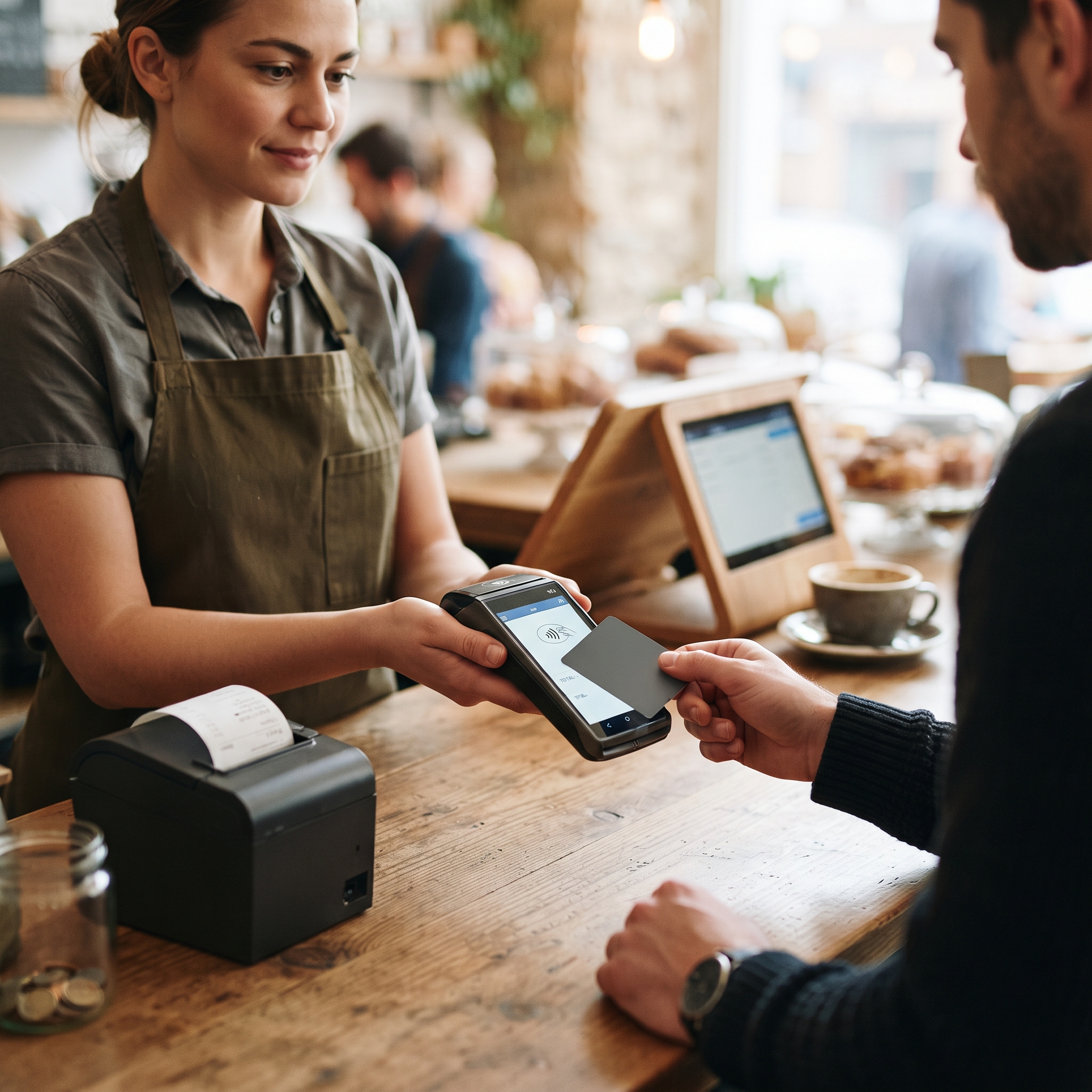
Does AI have any place at the checkout counter, then?
Yes — a big one. The wrong conclusion is "keep AI away from your POS." The right one is that the model should design on top of commerce infrastructure rather than generate a substitute for it. Let the model do what it now does astonishingly well — layout, flow logic, iteration at conversation speed — while payments, inventory, tax, and hardware run on systems built and certified for the job.
That division of labor is exactly what MCP (the Model Context Protocol, the open standard for connecting AI tools to external systems) makes possible, and it's why we built Final's Build around it. Type a prompt, choose "Connect your own AI (MCP)," and paste the generated block into ChatGPT, Claude Code, Cursor, or Codex — your own AI tool builds the checkout flow with a live preview, then deploys onto infrastructure where Final Pay handles the payments, certified terminals take the cards, and inventory stays correct across every station. GPT-5.6 really can build your point of sale in hours — as long as nobody asks it to also build the parts that took years. For the full walkthrough, see how to use ChatGPT-5.6 to build a custom point-of-sale.
Frequently asked questions
What is GPT-5.6?
GPT-5.6 is OpenAI's model family released July 9, 2026, in three tiers: Sol (the flagship), Terra, and Luna. Sol is OpenAI's strongest coding model to date, topping the Artificial Analysis Coding Agent Index at 80.
Can ChatGPT accept card payments?
No. Accepting card payments requires a merchant account, PCI compliance, and certified payment terminals for in-person transactions. A language model can write checkout code, but it cannot settle funds or certify hardware.
Can I use ChatGPT-5.6 to build a POS at all?
Yes — by connecting it over MCP to a platform that already runs the commerce infrastructure. The model designs the checkout flow; the platform handles payments, inventory, tax, and hardware.
What is the hardest part of a POS to build from scratch?
Payments and concurrency-safe inventory. Card acceptance involves contracts, audits, and certified devices, and inventory must resolve simultaneous sales correctly every time — neither can be generated as code.
What is MCP?
The Model Context Protocol is an open standard for connecting AI tools like ChatGPT, Claude Code, and Cursor to external systems, so the model can act on real infrastructure instead of only generating text.