



Can Claude Sonnet 5 Ring Up a Sale? What MCP Plugins Actually Let AI Agents Do at Checkout
Claude Sonnet 5 can navigate a checkout, but it can't move money on its own. Here's what MCP plugins actually let AI agents do at the point of sale — and what still takes a payment protocol.
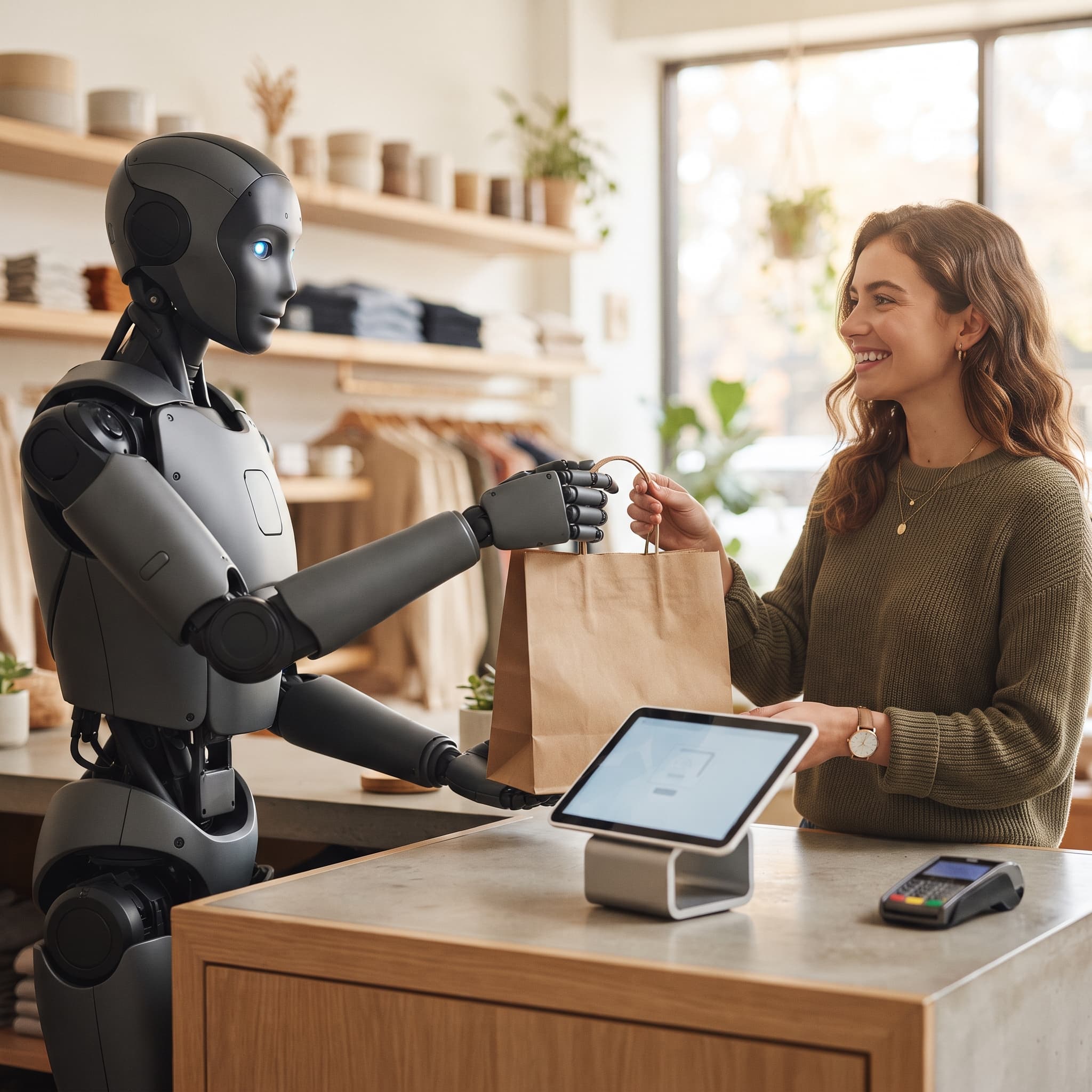
Can Claude Sonnet 5 ring up a sale? Not at the counter. But it can build the checkout that does. An AI agent can lay out a point-of-sale screen, load your products, set tax rules, and configure how payments behave. What it can't do is stand at the register and take the card. Knowing where those two jobs divide is the real story of AI agents at checkout in 2026.
So let's separate three things: what an AI model like Claude Sonnet 5 does, what an MCP plugin does, and what it takes to actually process a payment.
What is an MCP plugin, and what does it actually do?
The Model Context Protocol (MCP) is the connective tissue between an AI model and the outside world. Anthropic open-sourced it in November 2024 and donated it to the Linux Foundation's Agentic AI Foundation in December 2025, alongside Block and OpenAI. It has become the standard way to hand an AI agent a set of tools it can call.
An MCP plugin is a bundle — one or more MCP servers plus the instructions an agent needs to use them. The server publishes a menu of tools ("add a product," "create a checkout section," "set a tax group"), and the agent picks from that menu. MCP carries two things and two things only: discovery (what tools exist) and invocation (calling them). It does not carry payment, authorization, or the movement of funds. As the specs put it plainly, MCP never moves a dollar.
That line matters for a point of sale. If your POS exposes its building blocks as tools, an MCP plugin can let an agent assemble and configure a store — arrange the checkout grid, pull in a catalog, adjust pricing rules. It cannot, on its own, capture a payment.
Can an AI agent take a payment?
No, and this is where the excitement tends to get ahead of the plumbing. Taking a payment is not a text or tool-call problem. A card-present sale runs through certified terminal hardware, a payment processor, and a card network's authorization step. A keyed or stored-card payment still needs a processor to move the funds and a system of record to reconcile them.
An agent can kick off that flow, but the money travels through infrastructure the model does not own or control. For a system like Final, payments run through Final Pay on Stripe. The processor and its pricing rules settle the transaction; the AI does not. Keeping that boundary clear is what separates a useful build assistant from a security incident waiting to happen.
What did Claude Sonnet 5 change?
Anthropic released Claude Sonnet 5 on June 30, 2026, and pitched it as its most agentic mid-size model — able to plan, use tools like browsers and terminals, and run multi-step work autonomously at a level that used to require larger, pricier models. At an introductory $2 per million input tokens and $10 per million output tokens, running an agent through a long configuration task got much cheaper.
Two details matter for anyone running a store. First, sustained focus: Sonnet 5 holds a multi-step task together longer, which is what building out a full checkout demands. Second, safety in agentic settings — Anthropic reports it is better at refusing malicious requests and resisting prompt-injection attacks. When an agent has access to your store configuration and pricing, resisting a hijacked instruction stops being a nice-to-have.
None of that changes the division of labor. A more capable model builds and manages the checkout more reliably. It still doesn't settle the payment.
What does this mean for building a POS checkout?
The point-of-sale systems best positioned for an AI-agent future are the structured, modular ones. A drag-and-drop POS built from a grid of configurable sections is legible to an agent in a way a rigid, hard-coded system is not — every element is an addressable piece an agent can read, place, or change. A rigid legacy POS, where the checkout is baked in and the only interface is a locked-down settings screen, gives an agent nothing to work with.
This is no longer hypothetical. Final ships a live MCP connector for its builder: you connect the AI you already use — Claude, ChatGPT, or Gemini — describe the checkout you want, and the agent assembles it from the same structured building blocks a person would drag into place. The model does the building; the payment still settles through Final Pay on Stripe. That split is the whole point. The creative, configurable work opens up to an agent, and the money stays on proven infrastructure.
Pricing follows the same logic. A transaction-only model, with no monthly software fee, means building and rebuilding a checkout costs you nothing but the sales you actually make.
The honest read for 2026: an AI agent helping build your checkout is here, not on a roadmap. It rewards merchants whose systems are structured and modular over those stuck on rigid legacy tools. If you're weighing that gap, our take on what AI can and can't do for a business and the real cost of stacking SaaS subscriptions are worth a read.
Final was built for this: a checkout you can build by connecting the AI you already use, with the payment side running on infrastructure that was never going to be the model's job in the first place.
Frequently asked questions
Can Claude Sonnet 5 take a payment at checkout?
No. It can build and configure a checkout — lay out the screen, load products, set rules — but processing a payment requires a payment processor and, for in-person sales, certified terminal hardware. The model doesn't move the money.
What is an MCP plugin?
It's a bundle of one or more Model Context Protocol servers plus the instructions an agent needs to use them. It lets an AI agent discover and call tools, such as adding a product or creating a checkout section. It does not process payments.
Can an AI agent build a POS checkout?
Yes, and it's live today. Final's builder exposes an MCP connector, so you can link the AI you already use — Claude, ChatGPT, or Gemini — describe the checkout you want, and the agent builds it from structured drag-and-drop components. Payment still settles through a processor, not the model.
Does MCP handle payments?
No. MCP only carries tool discovery and invocation. Money moves through a payment processor — for Final, that's Final Pay on Stripe — and, for card-present sales, certified terminal hardware.