



First 90 Days of a New Retail Business: A Tech Plan
A phased 90-day tech plan for a new retail business: open with a minimal stack, spend month two learning which numbers to trust, and let real data decide what you add in month three.
 Mathias NielsenCEO, Final POS
A new retail business needs far less technology on opening day than most first-time owners buy. A workable 90-day tech plan runs in three phases: spend days 0 to 30 making every sale ring reliably, days 31 to 60 learning which numbers to trust, and days 61 to 90 adding tools only where your own data says you need them. Most new stores run this in reverse. They buy the full stack before the doors open, then spend month three canceling subscriptions.
Why not buy the full stack before opening day?
Because every tool bought before your first sale is bought on a guess: guessed traffic, guessed ticket size, guessed workflows. POS software alone commonly runs $0 to over $100 per month, and add-ons can layer another $0 to $100 or more on top¹. Those figures are accurate as of publication; treat the specifics as a snapshot. Commit to five or six subscriptions in week one and you are paying real money to support workflows you have never actually run.
The second cost shows up later. Every extra tool keeps its own copy of your products and customers, and those copies drift apart. Untangling that is painful enough that we wrote a separate tool consolidation playbook for stores already in the hole. The cheaper move is to never dig it.
Days 0 to 30: what does a new retail store actually need?
Four things: a point of sale, a way to take cards, one device, and staff who can use all three.
The point of sale matters most because it becomes your system of record (the one database every other tool trusts) from the very first sale. It is the one tech decision worth real diligence before opening; we covered how to evaluate the options in the best POS for retail in 2026.
Payments come bundled with that decision, so understand the pricing shape before you sign. A flat monthly subscription costs the same in a dead January as in a strong December, while per-transaction pricing (a percentage plus a small fixed fee per sale) only costs money when you are making money. For a store with zero sales history, the second shape carries far less risk.
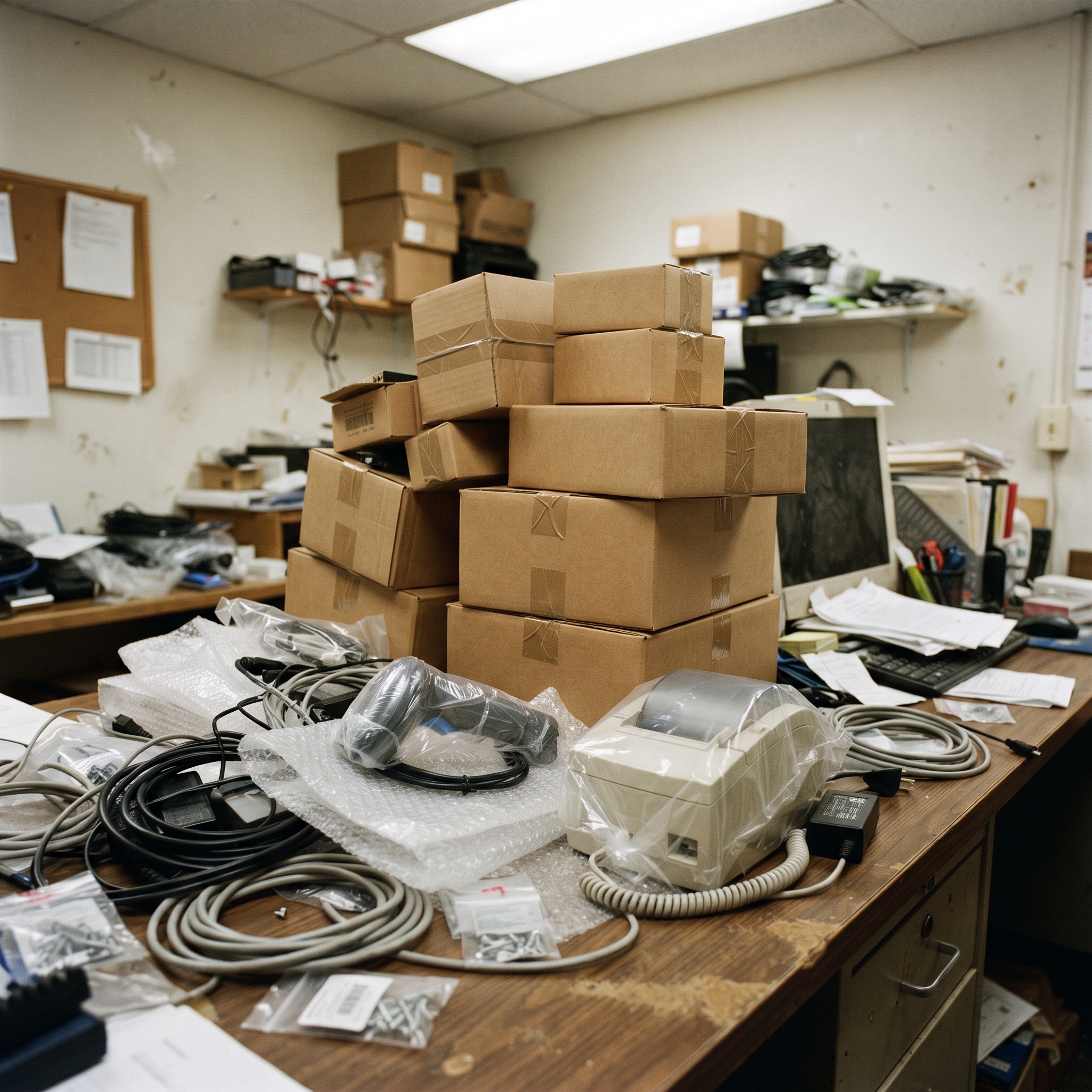
Hardware should start minimal: a tablet or phone you already own plus a certified card reader covers most counters on day one. Skip the barcode scanner, the customer display, and the second station until a queue proves you need them. Our guide to choosing POS hardware breaks down the components, and implementing a POS system step by step covers the rollout, including the part most owners skip: having staff run refunds, discounts, and exchanges before a customer is watching.

Days 31 to 60: which numbers should you learn to trust?
By day 31 you have something no pre-opening plan had: real data. Month two is for building three habits around it.
First, reconcile (match your sales records against what actually lands in the bank) every week, ideally every day. If your POS totals and your payouts disagree, you want to know in week five, not at tax time.
Second, read your sales reports weekly. A report like the Sales Breakdown shows your average ticket, your card mix, and your actual peak hours. Those three numbers quietly decide your processing costs, your staffing, and your opening hours, and by day 60 you should know each of them without looking.
Third, count stock. Run a recount on your top sellers and make the number on the shelf match the number in the system. Inventory that is wrong by week eight will be useless by month six.
None of this requires new software. It requires using the reporting your point of sale already includes.

Days 61 to 90: when is it time to add more tools?
When a measured gap shows up, and only then. Regulars asking you to track their purchases is a case for loyalty. A steady stream of messages asking "is this in stock?" is a case for putting inventory online. A tool added in response to your own data has a job on day one. A tool added on speculation is a subscription with ambitions.
Two objections are worth answering. Shouldn't you sell online from day one? If you are an online-first business, yes, but that is a different plan; for a physical store, the pre-opening e-commerce build is one of the most commonly shelved purchases. And won't adding tools later cost more than bundling early? No. Adding to a clean system of record is cheap. Migrating scattered data out of six tools is what costs money.
Whatever you add, hold it to one standard: it syncs with your point of sale in both directions, or it does not come in.
So what does a 90-day retail tech plan come down to?
Open with a POS, a payment path, and one device. Spend month two replacing every guess with a measured number. Spend month three adding only what your own data argues for, and only if it syncs with your system of record. Rule of thumb: if a tool will not make a sale more reliable in the next 30 days, it can wait.
Part of what makes the minimal opening stack workable now is that the point of sale itself has become flexible. Final's prompt-based AI builder lets a store describe the checkout and workflows it needs instead of renting a separate app for each gap, and the core platform has no monthly software subscription. If the pricing-shape question matters to your plan, how Final POS pricing works is the short version.
Frequently asked questions
What technology does a new retail store need on opening day?
A point of sale, a way to accept card payments, and one device, typically a tablet or phone with a certified card reader. Everything else can wait until real sales data justifies it.
How much does POS software cost for a new retail business?
Published pricing from major POS vendors ranges from $0 to over $100 per month for core software, with add-ons often costing a similar amount again. Per-transaction pricing avoids the fixed monthly commitment entirely.
Should a new retail store launch an online store in the first 90 days?
Usually not. Unless the business is online-first, a pre-opening e-commerce build is one of the most commonly shelved purchases. Add online selling when customer demand for it shows up in your own data.
When should a new store add loyalty or marketing tools?
When a measured gap appears, such as a clear base of repeat customers, and only if the tool syncs with your point of sale in both directions. A tool added on speculation usually goes unused.