



Interac Debit vs Credit Card Fees in Canada: What Merchants Really Pay Per Sale
Interac debit costs Canadian merchants cents per sale while credit costs a percentage. Here's what each really costs at $20, $50 and $100, why the gap exists, and what the rules allow.

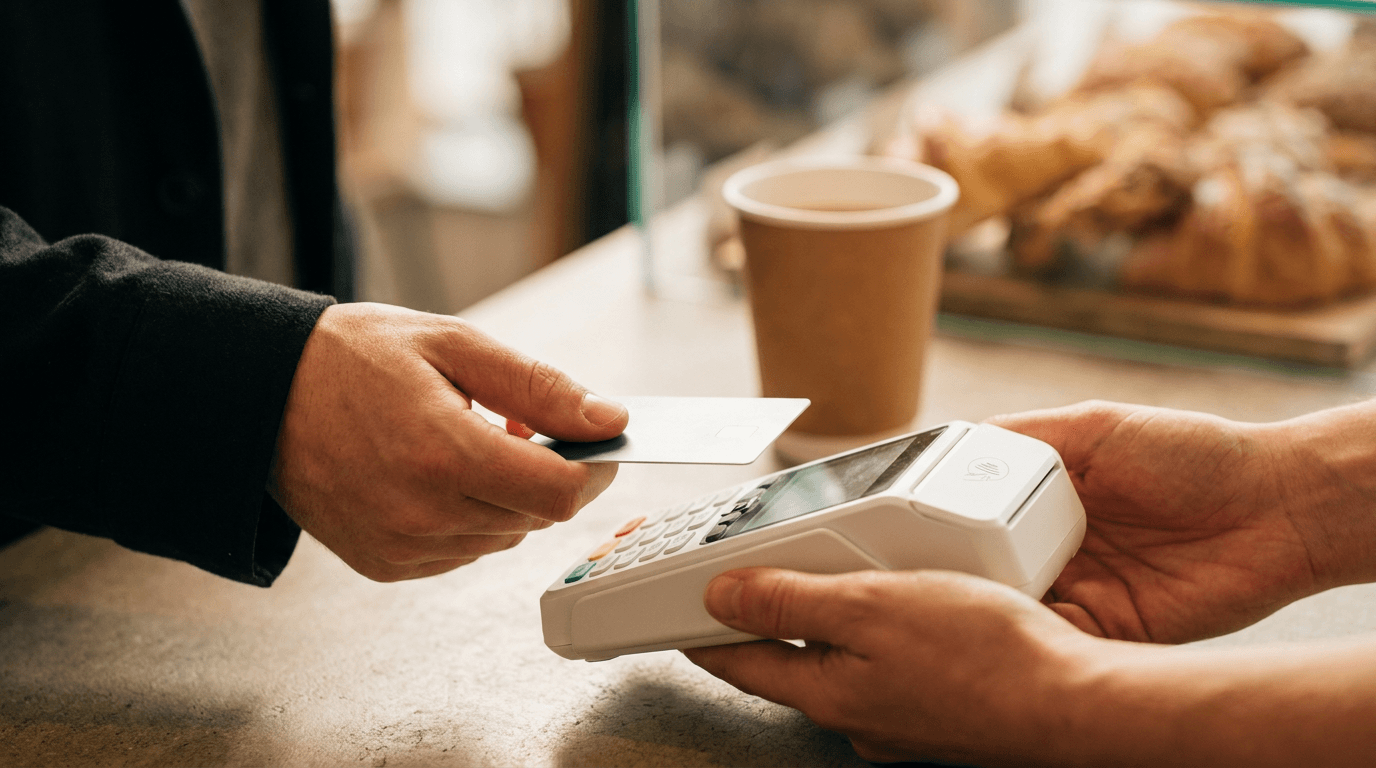
Interac debit almost always costs a merchant less per sale than credit. When you compare Interac debit vs credit card fees in Canada, debit usually costs cents per transaction, while credit costs a percentage of the sale. The Retail Council of Canada puts debit generally under 10 cents a transaction and up to 40 cents, and credit at 1.6% on basic cards up to 3% on premium ones¹. On a $50 sale, debit costs well under 50 cents while credit costs 80 cents to $1.50.
The gap matters because both get used constantly. Credit made up 43% of Canadian payment transactions in 2025 and debit 25%, according to Payments Canada². Fees and thresholds below are accurate as of publication in October 2026, so treat them as a snapshot.
Why does Interac cost so much less than credit?
Because the fees underneath are built differently. Interac's own network fee (its switch fee) is about 1.4 cents per transaction. The contactless interchange (the fee paid to the cardholder's bank) is a flat 2 to 3.5 cents on purchases up to $100³. Interac doesn't bill merchants directly. Your processor (the company that settles your card payments) sets your debit price.
Credit interchange is a percentage, and it climbs with the card. Visa Canada's published in-store rates run from 1.25% on Classic, Gold and Platinum cards to 2.08% on Infinite Privilege⁴. Mastercard's run from 0.92% on core cards to 1.56% on World Elite⁵. Your processor's markup sits on top. Premium rewards cards cost you more because the rewards are paid for out of that interchange.

What does a merchant actually pay per sale?
That depends on how your provider prices each card type. Debit is usually a flat fee per transaction or a small percentage plus a fixed fee. Credit is usually one blended rate for most cards, sometimes with a fixed fee on top.
Here's how it plays out on Final's published Canadian rates, 0.5% + 7¢ on in-person Interac and 1.99% + 10¢ on in-person credit:
$20 sale: Interac 17¢, credit 50¢.
$50 sale: Interac 32¢, credit $1.10.
$100 sale: Interac 57¢, credit $2.09.
Debit costs about a third of credit or less at every ticket size. The bigger your average ticket, the more each credit sale costs in dollars, so a furniture store and a coffee shop on the same rate get very different bills. We go deeper on the full cost picture in what a POS system really costs.
Did the 2024 credit card fee cut lower your rate?
It might have. From October 19, 2024, Visa and Mastercard cut in-store interchange for eligible small businesses to a weighted average of 0.95%, with reductions of up to 27%⁶. Eligibility was set at under $300,000 a year in Visa credit sales and under $175,000 in Mastercard credit sales. Visa raised its threshold to $750,000 from October 24, 2026⁷.
On a flat blended rate, a lower interchange doesn't automatically lower your price. The Code of Conduct for the Payment Card Industry in Canada requires monthly statements showing your effective rate (total fees divided by total sales). It also requires advance notice of fee increases and lets you cancel without penalty after one⁸. Compare your effective rate before and after October 2024 to see whether the cut reached you.

Can you charge customers a fee for paying by credit?
Yes, with limits. Surcharging credit has been allowed in Canada since October 6, 2022, capped at 2.4% and never more than what the card costs you to accept⁹. You must give the network and your processor 30 days' notice, post the fee at the entrance and at checkout, and show it on the receipt. Visa and Mastercard debit and prepaid cards can't be surcharged, and Quebec merchants can't surcharge consumers.
Whether you should is a separate question. A surcharge recovers fees but adds friction at the counter. Some shops nudge customers toward debit instead.
So, how much more does credit cost than Interac?
On a typical $50 sale, Interac costs a merchant about 10 to 45 cents, depending on how it's priced. Credit costs roughly 80 cents to $1.50. Debit is the cheap card for you, and credit is where your rate matters most.
Rule of thumb: know your average ticket and your debit share before you compare any rate. Final Pay's full Canadian rates, including American Express, are on the Final Pay pricing page. For the other half of the bill, see our guide to POS systems with no monthly fee. And if you take payments on a phone, see what a phone can do as a POS.
Frequently asked questions
How much does Interac debit cost a merchant in Canada?
The Retail Council of Canada puts debit generally under 10 cents a transaction and up to 40 cents, depending on how your provider prices it. Final charges 0.5% + 7 cents on in-person Interac, or 32 cents on a $50 sale.
Is it cheaper for a business when customers pay with debit?
Yes, on almost every sale. On Final's published rates, a $50 sale costs 32 cents on Interac and $1.10 on credit, and debit stays at about a third of the credit cost or less at every ticket size.
Can a business charge extra for credit cards in Canada?
Yes. Since October 6, 2022, merchants outside Quebec can add a credit card surcharge of up to 2.4%, no more than their cost of acceptance, with notice to the network and processor and signs at the entrance and checkout. Visa and Mastercard debit and prepaid cards can't be surcharged.
What is interchange?
Interchange is the fee paid to the cardholder's bank on each card sale. Credit interchange is a percentage set by Visa and Mastercard, while Interac contactless interchange is a flat 2 to 3.5 cents on purchases up to $100.
Did credit card fees go down for small businesses in Canada?
Yes. From October 19, 2024, Visa and Mastercard lowered in-store interchange for eligible small businesses to a weighted average of 0.95%. Visa raised its eligibility threshold to $750,000 in annual Visa sales from October 24, 2026.
What is the Interac Flash limit?
Interac says the contactless limit is typically set to $250, but it varies by bank.
Does Interac debit work for online payments?
Yes, Interac Debit works in apps and browsers. Online Interac interchange is a percentage, 0.60% by default, capped at $1.80 on purchases of $300 or more.