


Tap to Pay Limits, Fees, and Myths in 2026
Tap limits differ across Canada, the UK, and the US, tapping costs merchants nothing extra, and most contactless horror stories are myths. The 2026 facts, with sources.


Tap to pay limits in 2026 come down to two things: the country you sell in and the bank that issued the card. In Canada, most cards cap a single tap around $250. In the UK, banks have set their own limits since March 2026. In the US, there has never been a blanket cap. On the cost side, a tap is priced as a card-present payment (the card is physically there), so merchants pay nothing extra to accept one. And most of the scary stories about tapping are myths.
One caveat before the numbers: rules in this space move quickly, so treat the specifics below as a snapshot, accurate as of publication in August 2026. Confirm your own numbers with your bank or processor before relying on them.
What are the tap to pay limits in 2026?
There is no single global tap limit. Card networks set ceilings, the customer's bank picks the actual number, and the terminal enforces whatever the card asks for. Contactless went from novelty to default in under a decade, but the limits stayed local:
Canada: Visa and Mastercard raised tap ceilings from $100 to $250 in 2020¹, and Interac allows banks to set contactless debit limits up to $250². Most Canadian cards now sit at or near $250 per tap, but each bank chooses its own number.
United Kingdom: the £100 cap is gone. Since March 2026, banks and payment firms with strong fraud controls can set their own contactless limits, and the regulator encourages them to let customers pick a personal limit or turn tap off entirely³. Nearly 95% of eligible in-store card transactions in the UK were already contactless in 2024³, so most banks are keeping limits close to the old level for now.
United States: no blanket tap cap has ever applied. Approval decisions sit with the card network and the issuing bank, and everyday amounts simply go through.
Phone and watch wallets: unlocking the phone with a face, fingerprint, or passcode counts as verifying the cardholder, so wallet taps are often approved above the plastic-card ceiling. The terminal and the issuing bank still get the final say.
If a tap under the limit gets declined, the amount is usually not the reason. Cards run cumulative security checks: after a stretch of consecutive taps, the card wants one insert with a PIN to prove it is still in the right hands. One inserted payment resets the counter.

Do merchants pay more to accept tap to pay?
No. A tap is a card-present payment, and card-present is the cheapest way to take a card. Processors price a tapped card like an inserted one; Final Pay's pricing, for example, applies the same card-present rate whether the card is tapped, inserted, or swiped, including Tap to Pay on a phone, with no monthly software fee attached.
Three things do move your processing cost, and none of them is the tap:
Card-present vs card-not-present: keyed-in phone orders and payment links carry a higher rate than an in-person tap because the fraud risk is higher. If you take orders by phone, do it without writing card numbers down.
Card brand: American Express usually costs more per charge than Visa or Mastercard.
Ticket size and card mix: percentage fees scale with your average sale, and flat per-transaction fees bite hardest on small tickets.
When you compare providers, compare the whole bill: processing rate plus software subscription plus hardware. A slightly lower rate frequently loses once a monthly software fee and a terminal rental land on top of it.

Is tap to pay safe? Five myths that refuse to die
"Tap is less secure than chip." False. A tap runs on the same chip and generates a one-time code (a single-use stand-in for your card details) for every transaction. A stolen code is worthless for a second purchase. The insecure method is the magnetic stripe swipe, which is why it is disappearing.
"Someone can skim your card by brushing past you with a reader." Overblown. A live reader requires a registered merchant account, so any stolen tap pays out to a traceable business bank account, and each tap is capped by the limits above. UK banks must reimburse unauthorized card fraud³, and the major card networks publish zero-liability policies for unauthorized use.
"Tapping twice charges you twice." The terminal requests one authorization per sale. A real double charge is the sale being rung in twice at the register, and it is disputable like any other error.
"Merchants pay a premium for contactless." Covered above. A tap prices as card-present, typically the lowest acceptance cost there is.
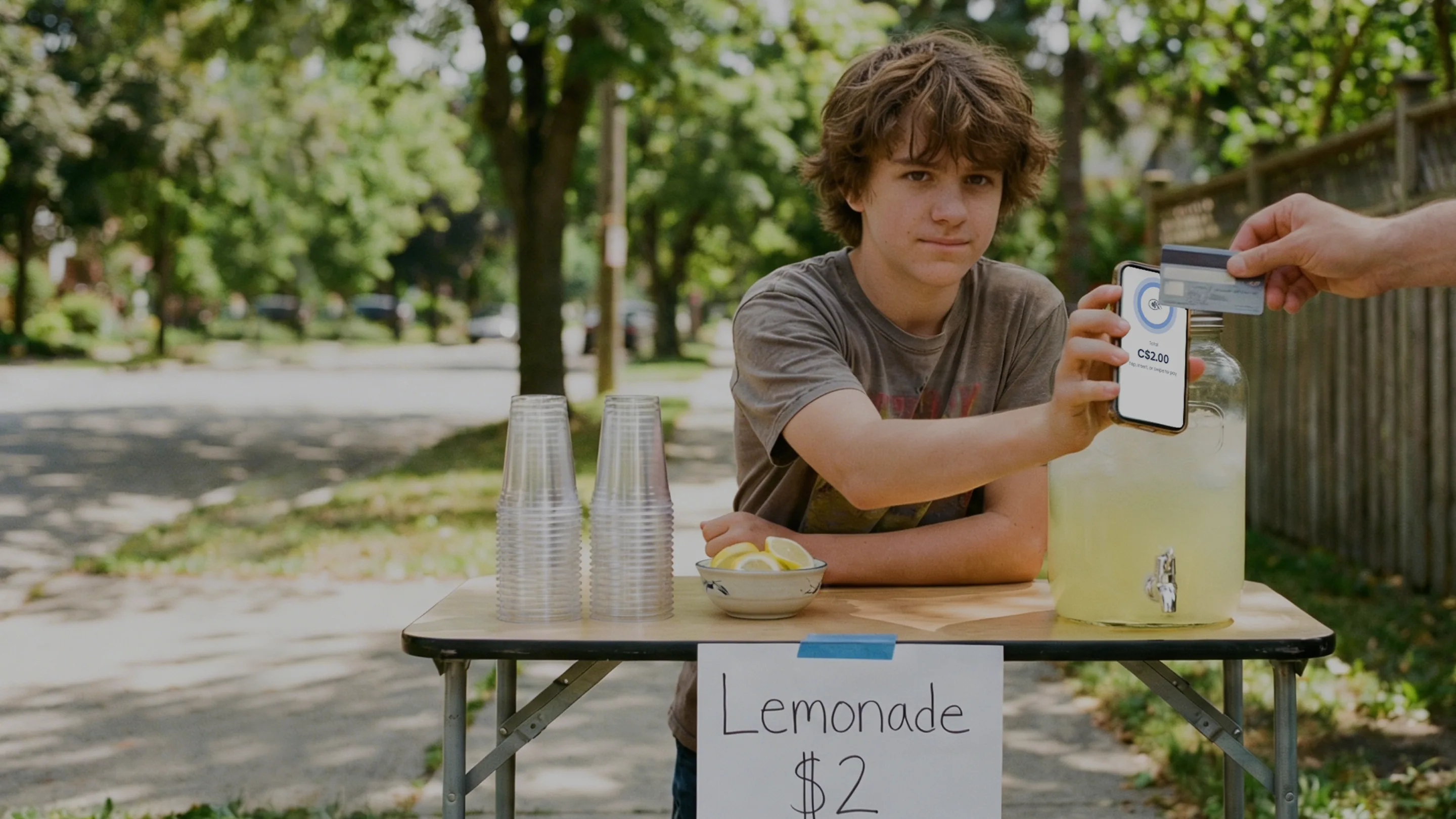
"You need a terminal to accept tap." Not since Tap to Pay arrived on phones. A supported iPhone or Android device can take the payment itself, and if your checkout was built by AI, Tap to Pay drops into the flow without wiring. Dedicated certified terminals still earn their place on busy counters.

So what actually matters about tap to pay in 2026?
The limit is set by your customer's bank, not by you. The fee is set by how the card is taken, and a tap is the cheapest kind. The security panic dates from a decade ago and did not survive tokenization (the one-time-code system above). Rule of thumb: if the card or phone touches the reader, you are paying the lowest rate that card can offer. If you want to try taking a tap on the phone already in your pocket, the Tap to Pay how-to takes about two minutes to follow.
Frequently asked questions
What is the tap to pay limit in Canada in 2026?
Most Visa, Mastercard, and Interac cards cap a single tap at or near $250, but the issuing bank sets the exact number and some sit lower. Phone wallets can be approved above the card ceiling because the device verifies the cardholder.
Why was my tap declined when the amount was under the limit?
Cards run cumulative security checks. After several consecutive taps, the card asks for one chip-and-PIN insert to confirm it is still in the cardholder's hands, then tapping works again.
Does tapping cost the customer anything extra?
No. Tapping a card costs the cardholder the same as inserting it, and there is no per-tap fee. Regular account fees from the bank apply either way.
Is tap to pay safe?
Yes. Each tap generates a one-time code that is useless if intercepted, and unauthorized charges are covered by bank reimbursement rules and card network zero-liability policies.
Can a business accept tap to pay without buying a terminal?
Yes. Tap to Pay lets a supported iPhone or Android phone act as the card reader, so a new business can take contactless payments with no extra hardware.