


Dezvoltarea prin „Vibe Coding” a unui POS: Cât de departe poți ajunge de fapt?
Vibe coding vă oferă un demo convingător de POS într-o după-amiază. Nu vă oferă însă un inventar care să supraviețuiască la două vânzări simultane, rapoarte care se reconciliază sau plăți cu cardul. Iată unde se află de fapt obstacolul.
 Mathias NielsenCEO, Final POS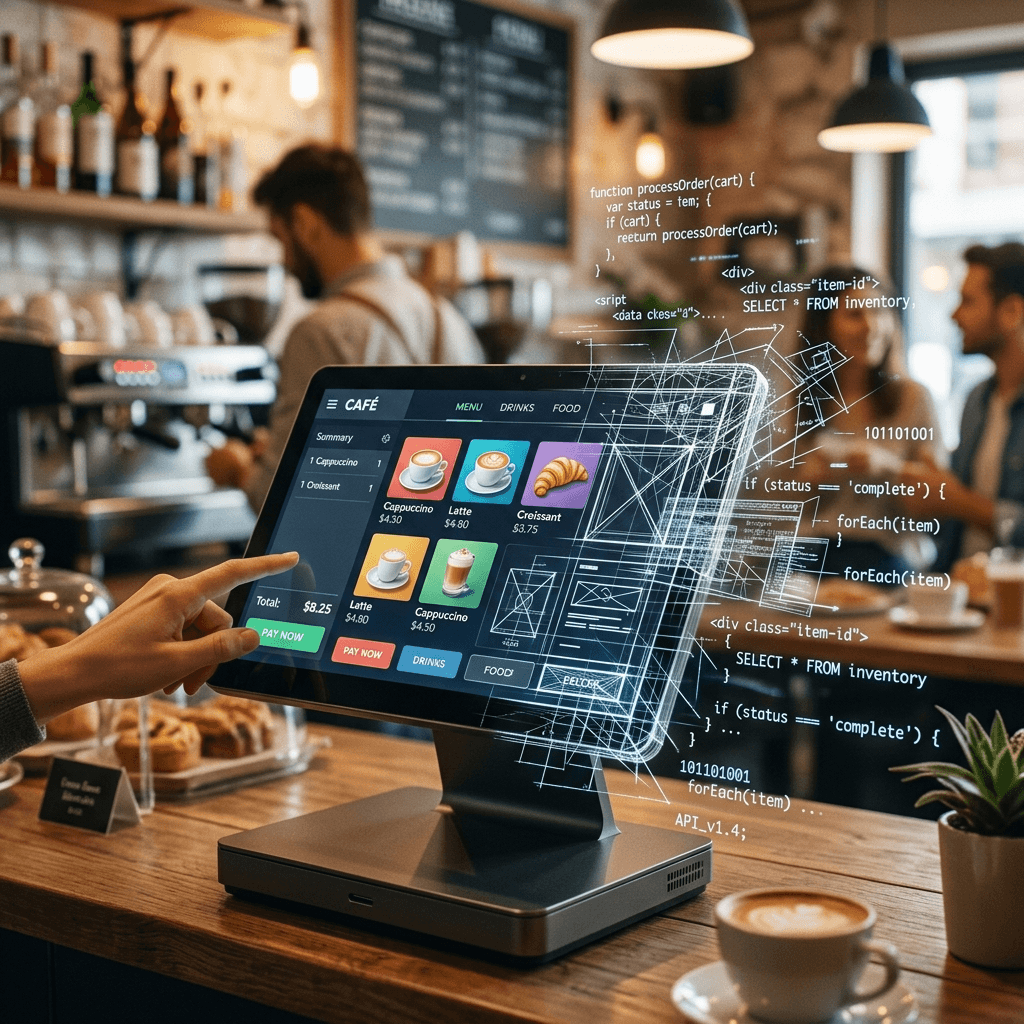
Surprisingly far, and then into a wall. Vibe coding a point of sale gets you a convincing checkout screen, a product catalog, and working cart logic in an afternoon, with no code knowledge required. What it does not get you is a POS you can run a business on. The distance between those two things is the subject of this post, because the demo makes the gap look much smaller than it is.
One caveat before the specifics: AI tools change monthly, so treat the details here as a snapshot, accurate as of publication.

What can you actually build by vibe coding?
More than the skeptics claim. Give a tool like Lovable, Replit, or v0 the prompt "build a POS for my coffee shop" and you get back a real interface: menu grid, modifiers, a cart, a total, maybe a mock payment step. It looks right, it clicks right, and you can put it in front of people the same day.
That is not a trick. For the visible layer of a POS, AI generation is legitimately good, and it keeps getting better. If what you need is a prototype, a pitch demo, or a way to think through your own checkout flow, vibe coding delivers.
Where does a vibe-coded POS fall apart?
At the parts that have to be correct every time, with nobody watching.
Inventory under concurrency (two sales hitting at the same moment): AI-generated stock logic typically reads a quantity, subtracts one, and writes it back. Two simultaneous sales of the last unit both succeed, and you have sold stock you do not have.
Reports that reconcile (totals that match the money that actually moved): a demo report sums a table. A real report survives refunds, voids, partial payments, and mid-day price changes without drifting from your processor's numbers.
Tax: rates by region, rules by product category, rounding at the line level versus the total. Wrong answers here are not bugs, they are liabilities.
Security: in Veracode's 2025 study of over 100 AI models, 45% of generated code samples failed security tests against the OWASP Top 10, and the failure rate did not improve with newer or larger models¹.
None of these failures show up in a demo. All of them show up in month two of running a store.
What about taking real payments?
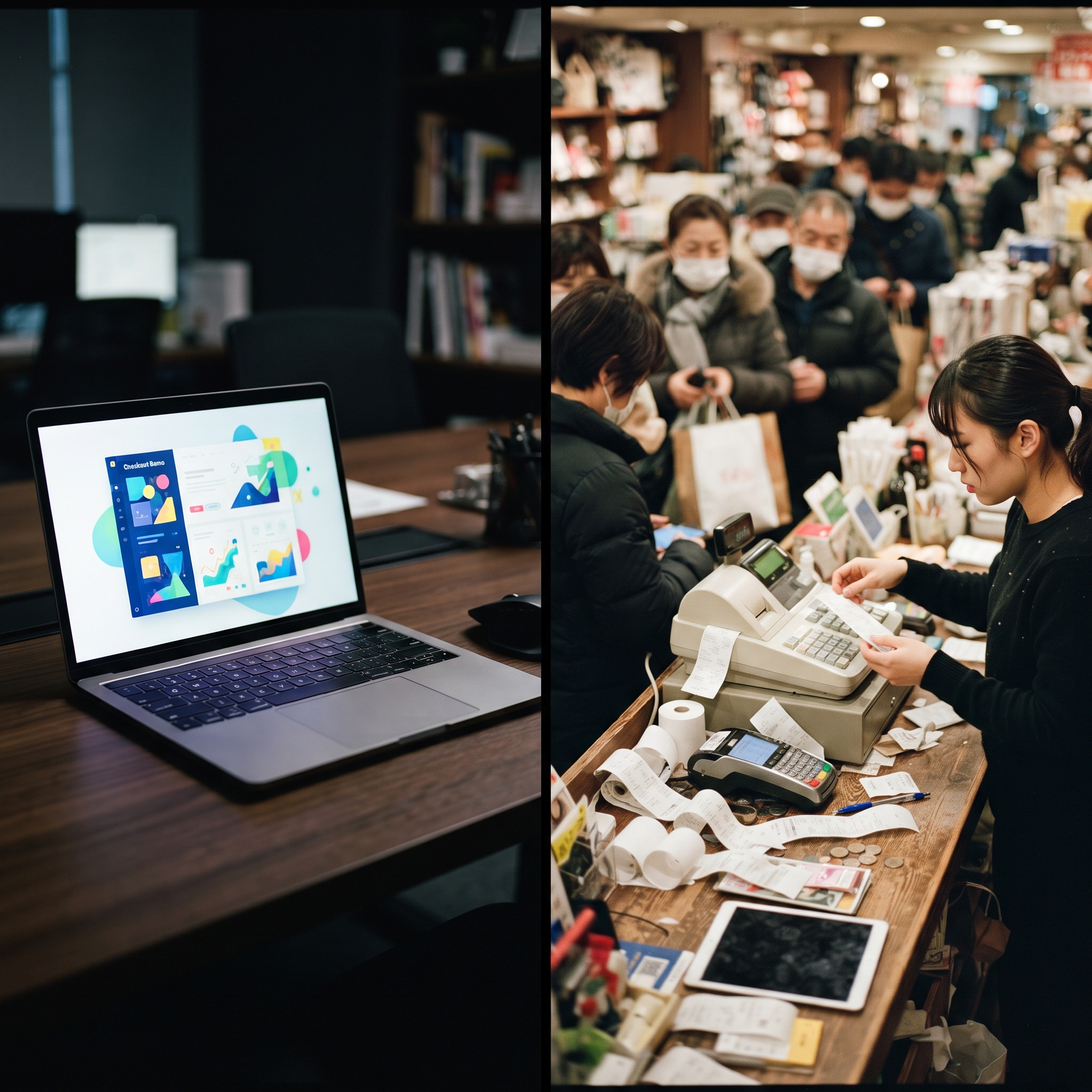
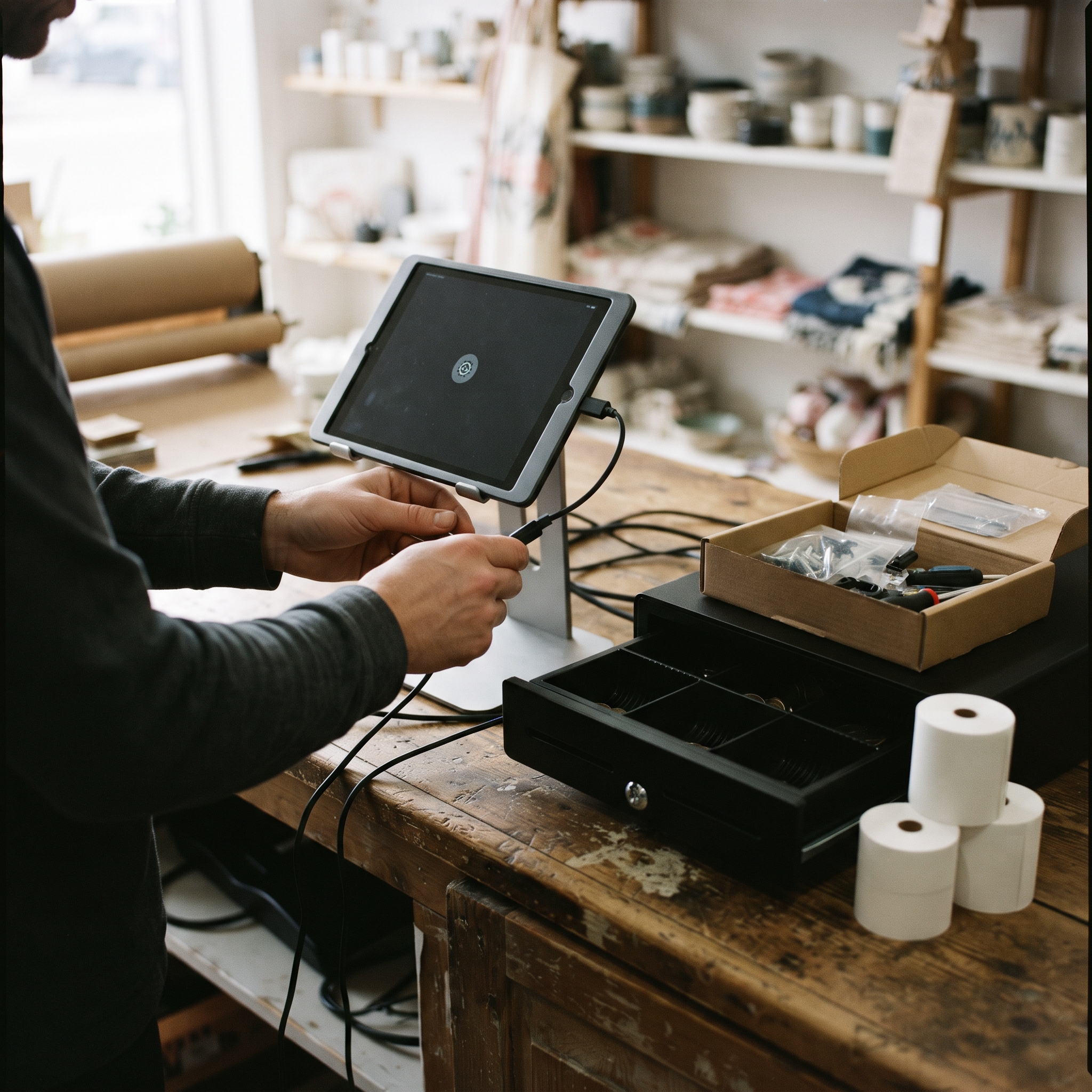
This is the hardest stop. Online card payments require PCI compliance (card-data security rules), and card-present payments additionally require certified terminal hardware paired with a payment processor. There is no prompt that outputs a hardware certification.
Apple and Google enforce this at the gate: we have covered why vibe-coded payment apps get rejected from the App Store, and the short version is that review teams check who is routing the payments long before they check how nice your interface is.
Can you tell if the AI got it wrong?
This question decides whether vibe coding is safe for a given part of your POS. You can judge a checkout screen by looking at it. You cannot judge inventory locking or reconciliation code by looking at it, and most merchants would not know what to look for.
The standard objection is "have a developer review the AI's output." Fair, but then you are paying for development anyway, and reviewing someone else's unfamiliar code, human or AI, is often slower than writing it fresh. The economics that made vibe coding attractive are gone.
So, how far can you actually get?
All the way to a convincing demo, and almost nowhere on the parts that make a POS a business system. The visible layer is a solved problem for AI; the money layer is not, and it fails silently. The practical rule of thumb: before you let AI build something, ask whether you could tell if it got it wrong. If yes, prompt away. If no, that part belongs on tested infrastructure.
That split is exactly how AI POS builders like Final's are structured: the AI designs your checkout flows while inventory, reporting, and payments run on pre-built rails it cannot break. If you want to see what that looks like in practice, start with building your first flow or our walkthrough of using ChatGPT to build a custom POS.
Întrebări frecvente
Ce este vibe coding?
Vibe coding înseamnă să descrii software-ul pe care ți-l dorești într-un limbaj simplu și să lași o IA să scrie codul, acceptând rezultatul în mare parte pe încredere. Termenul a luat avânt în 2025 și acoperă acum instrumente precum Lovable, Replit și v0, precum și scrierea de cod direct cu un chatbot.
Poate IA să creeze un sistem POS complet dintr-un singur prompt?
Poate construi stratul vizibil: ecranul de checkout, catalogul de produse și logica coșului de cumpărături. Părțile de care depinde o afacere, cum ar fi gestionarea corectă a stocurilor sub sarcină mare, rapoartele care se reconciliază și plățile conforme cu cardul, au nevoie de o infrastructură comercială testată la baza inteligenței artificiale.
Este software-ul creat prin vibe-coding sigur pentru acceptarea plăților cu cardul?
Nu de unul singur. Plățile cu cardul necesită conformitate PCI (reguli de securitate a datelor cardului), iar plățile cu cardul prezent necesită terminale hardware certificate. Niciuna dintre acestea nu poate fi generată printr-un prompt, motiv pentru care aplicațiile de plată create prin vibe-coding sunt respinse în mod regulat din magazinele de aplicații.
Care este diferența dintre un POS demo și un POS de producție?
Un demo trebuie să funcționeze o singură dată, în timp ce îl urmărești. Un POS de producție trebuie să funcționeze corect de fiecare dată, fără ca cineva să îl supravegheze: două vânzări simultane nu trebuie să ducă la vânzarea peste stocul disponibil, iar fiecare raport trebuie să corespundă cu banii care s-au mișcat efectiv.