



Why Every Retail Platform Will Need an MCP Server
AI agents are becoming retail software's second user. An MCP server is how a platform stays visible to them, and the next split is between platforms agents can operate and platforms agents can build on.
 Mathias NielsenCEO, Final POS
Retail software is about to have two kinds of users. The first is human: the merchant at the counter, the shopper at checkout. The second is an AI agent working on a human's behalf, and an MCP server is how a retail platform makes itself usable to that second kind. Platforms that expose one will be visible to the agents doing a growing share of the buying, the operating, and soon the building. Platforms that don't will be invisible to them.
The specifics below are accurate as of publication in July 2026. Protocols, rollouts, and model names in this space change monthly, so treat the details as a snapshot.
What is an MCP server, in plain terms?
An MCP server is a standard connector that lets AI tools see and use a software platform. MCP stands for Model Context Protocol, an open standard Anthropic released in November 2024. The platform runs the server, which describes what the platform can do in a form any compatible AI tool can read. The AI tool is the client: it discovers the available actions, calls them, and gets structured results back.
Before MCP, connecting an AI assistant to a platform meant a custom integration against that platform's API (the interface software uses to talk to other software), rebuilt for every assistant. MCP collapses that to one connector. Build one server and every MCP-capable tool can plug in: Claude, ChatGPT, Cursor, Codex, and the growing list behind them.

Why are retail platforms racing to add MCP servers?
Because shopping and store management are both starting to route through AI assistants, and MCP is the plumbing those assistants share. The industry calls it agentic commerce (AI completing shopping tasks on a person's behalf), and over the past year it moved from concept to infrastructure.
In January 2026, Google launched the Universal Commerce Protocol, an open standard for agent-driven shopping co-developed with Shopify, Etsy, Wayfair, Target, and Walmart, and built to be compatible with MCP. Square's parent company Block was one of MCP's earliest adopters, and Square now offers an official MCP server that lets AI agents work across its API platform. Shopify has been shipping MCP tooling to its merchants as part of its own agentic push. None of this is experimental anymore; it is roadmap.
The logic is blunt. If a shopper's assistant compares products and completes purchases through agent protocols, a store it cannot query does not exist for that shopper. The same applies on the merchant side: owners already juggling a stack of subscription tools will hand the busywork to an assistant, and they will favor platforms the assistant can actually reach.
What can an AI agent do with a retail MCP server today?
Two jobs, almost everywhere you look. The first is selling: exposing catalog, inventory, and policies so shopping agents can find products, check stock, and complete a purchase. The second is operating: letting a merchant's own assistant update the catalog, pull reports, issue refunds, or draft purchase orders through conversation instead of dashboard clicks.

Both are real and both are useful. Notice what they share, though: they assume the store and the system running it already exist. Today's retail MCP servers overwhelmingly wrap an existing platform's API so an agent can operate an account that humans already set up.
Where does "operate" end and "build" begin?
Operating is the easy half. The harder question is whether an agent can build the system itself: design the checkout, wire up the flows, and deploy the result to a real counter. That is where general-purpose AI hits a wall. Vibe coding a point of sale will get you a convincing demo in an afternoon, but a working POS also needs inventory that stays correct under concurrency (two sales at the same instant), reports that reconcile (every dollar traceable to a transaction), PCI-compliant payments (the card industry's data security rules), and certified terminal hardware. An agent cannot prompt those into existence. The platform underneath has to guarantee them, and its MCP server has to hand the agent safe levers to work them.
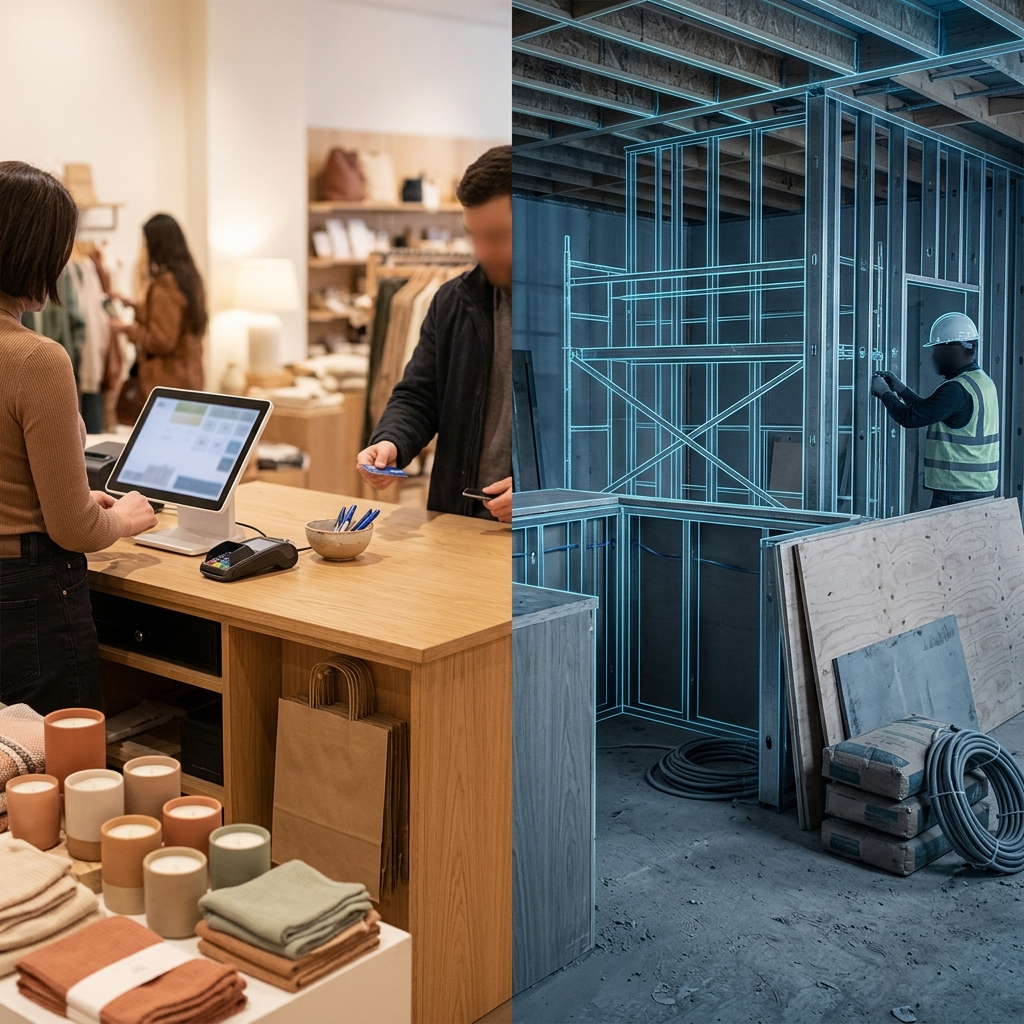
So expect retail MCP servers to split into two tiers: servers that let agents operate an existing platform, and servers that let agents build on infrastructure the platform guarantees. The first tier is getting crowded fast. The second barely exists. Final's MCP sits in that second tier: connect your own AI (Claude Code, Cursor, ChatGPT, or Codex) and it builds and deploys a working POS on Final's infrastructure, with a live preview as it goes. The model builds; it never touches settlement, which stays with Final Pay and a payment processor. We covered what that looks like with a frontier model driving it.
So, will every retail platform need an MCP server?
Yes. Within a few years an MCP server, or an agent interface compatible with one, will be as unremarkable as an API or a mobile app: not a differentiator, just the price of being usable. The real differentiator moves down a layer, to what a platform lets an agent safely do, and "build" is a much higher bar than "operate." The rule of thumb: if an AI agent can't see your platform, it can't sell for it, run it, or build on it.
For merchants choosing a POS in 2026, that adds one question to the shortlist: does this platform have an MCP server, and what is an agent allowed to do through it? If you want the build side in two minutes, start with what makes Final different.
Frequently asked questions
Is MCP the same as UCP or other agentic commerce protocols?
No. MCP is a general standard for connecting AI tools to any software system, released by Anthropic in 2024. UCP is a commerce-specific standard for completing purchases across surfaces like Search and the Gemini app, and it is built to be compatible with MCP. They sit at different layers rather than competing head-on.
Do small merchants need to build their own MCP server?
No. The platform provides the MCP server; merchants just benefit from it. What matters when choosing a platform is whether an MCP server exists and what an AI agent is allowed to do through it.
Can an AI agent take payments through an MCP server?
Agents can look up products, manage a store, and on some platforms build one, but settlement runs on the platform's payment rails and certified hardware. On Final, Final Pay and a payment processor handle the money; the AI model never does.
Which AI tools can connect to a retail MCP server?
Any MCP client, including Claude Code, Cursor, ChatGPT, and Codex. That is the point of the standard: one server on the platform side, many interchangeable tools on the agent side.