



POS Terminology: 30 Terms Every New Merchant Should Know
From interchange to stocktakes, these 30 POS terms cover the hardware, payments, inventory and daily routines every new merchant runs into in the first month.
 Mathias NielsenCEO, Final POS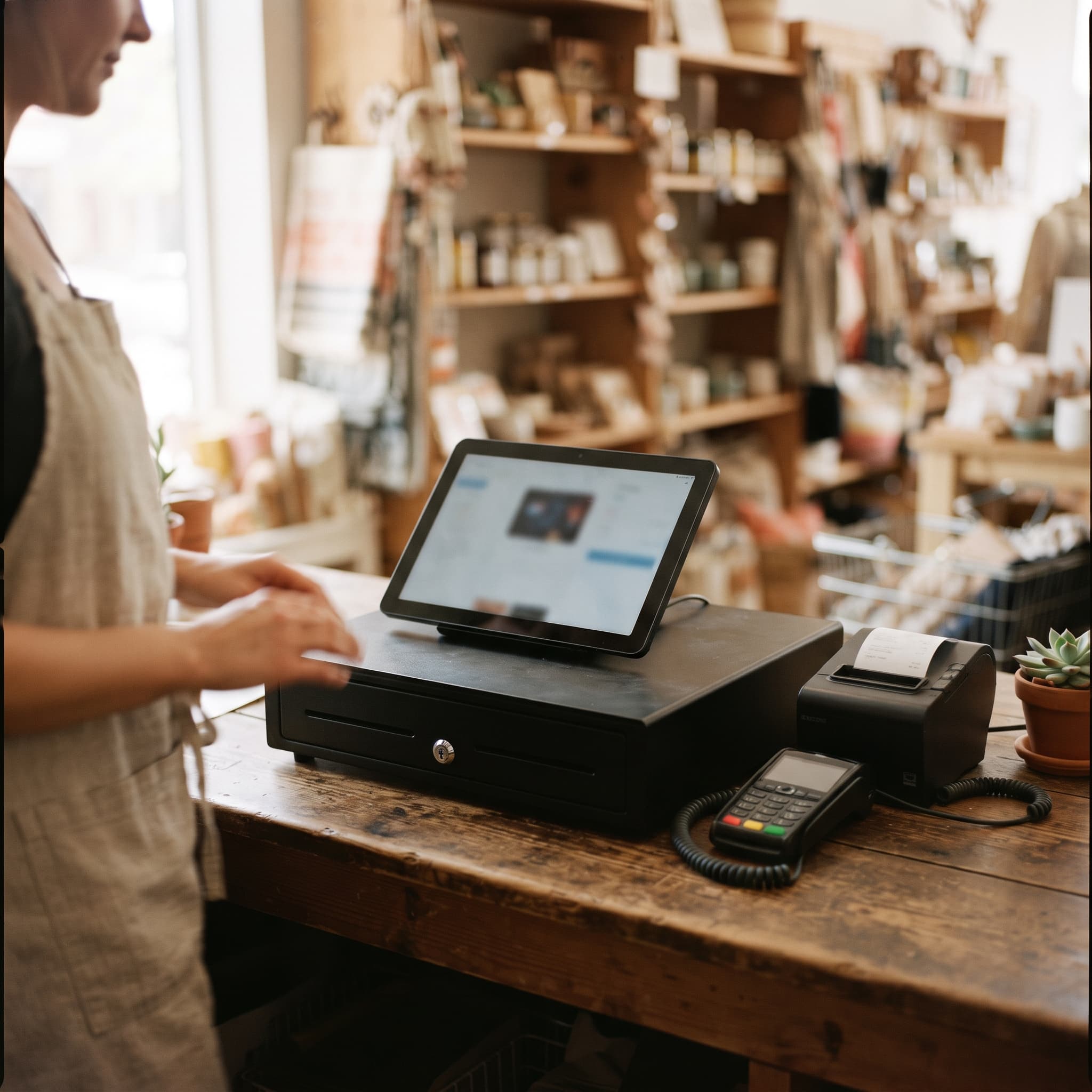
POS terminology splits into four buckets: hardware, payments, inventory, and daily operations. The 30 terms below cover all four in plain English, so you can read a processor statement, run a stocktake, and close a till without guessing what anything means. If you want the bigger picture first, start with what a POS system is and how the pieces fit together, then come back for the vocabulary.
What hardware terms will you hear first?
The physical kit on your counter comes up in every sales conversation and every support call, so start here.
POS terminal — the device that runs your point-of-sale software: a tablet, a touchscreen till, or a phone. People say "terminal" loosely for both this and the card reader, which causes real confusion when ordering hardware.
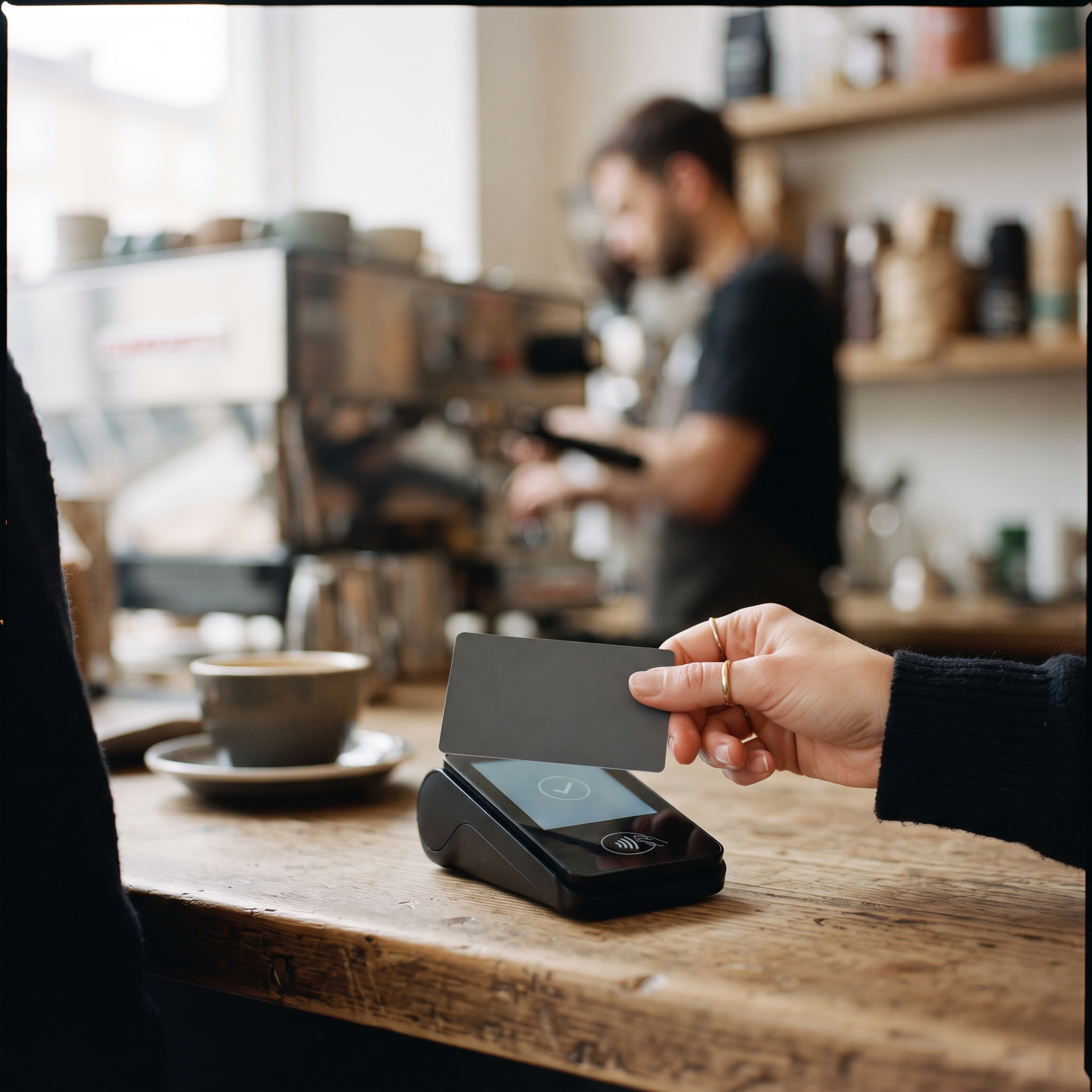
Payment terminal (card reader) — the certified device that reads chip, swipe and contactless payments. Certification matters: card-present transactions have to run through approved hardware, not whatever gadget is cheapest.
Receipt printer — almost always a thermal printer. No ink, heat-sensitive paper, and it usually doubles as the trigger that pops the cash drawer.
Cash drawer — the locking drawer under the counter, opened by the POS or the printer rather than a key, so every opening ties to a transaction.
Barcode scanner — reads barcodes so staff pull up the exact product instead of keying it in. The cheapest way to cut both checkout time and pricing errors.
Customer-facing display — a second screen pointed at the customer showing line items, the total, and often a tip prompt.
Which payment terms actually affect your costs?
Several of these are line items on your monthly statement, which makes them the most expensive terms on this list to misunderstand.
Payment processor — the company that moves money from your customer's card to your bank account and takes a cut of every transaction for doing it.
Payment gateway — the software layer that securely carries transaction data to the processor. Online, the gateway captures the card details; in person, the payment terminal does that job.
Interchange — the fee set by card networks and paid to the customer's bank on every card transaction. It is the floor under every rate you will ever be quoted; flat-rate pricing simply bundles it into one predictable number.
Card-present — the card or phone wallet is physically tapped, inserted or swiped at your counter. Lower fraud risk, so lower rates.
Card-not-present — the card isn't physically read: online orders, keyed entries, phone orders. Higher risk, higher rates, and most of your chargebacks.
MOTO — Mail Order / Telephone Order. A card-not-present method where your staff key in card details the customer gives them remotely.
Contactless (tap to pay) — NFC payments from a card, phone or watch. "Tap to Pay on mobile" means accepting them directly on a supported phone with no separate reader.
PCI DSS — the Payment Card Industry Data Security Standard, the security rules for anyone who handles card data. Most small merchants stay compliant by using certified hardware and completing an annual self-assessment questionnaire.
Chargeback — a transaction reversed by the cardholder's bank after a dispute. You lose the sale, pay a dispute fee, and get the money back only if you win with evidence like receipts and delivery confirmation.
Payout (settlement) — the moment your processor actually deposits card takings into your bank account, typically a day or two after the sale. Instant payouts exist and cost extra.
What do the inventory terms mean?
Inventory vocabulary decides whether your stock numbers can be trusted, which decides whether your reports can be trusted.

SKU — stock keeping unit: your internal code for one sellable item. One SKU per variant, and it belongs to you, not the manufacturer.
Barcode (UPC/EAN) — the printed code on the product itself, assigned by the manufacturer. UPC dominates North America, EAN most other regions. Your SKU and the barcode can map to the same item without being the same code.
Variant — one specific version of a product, like a medium blue t-shirt. Variants are built from attributes such as size and color, and each one gets its own SKU and stock count.
Stocktake (inventory count) — physically counting what's on the shelf and reconciling it against what the system says. The gap between the two is shrinkage: theft, breakage, and miscounts.
Purchase order (PO) — the document you send a supplier to order stock. Receiving against a PO is what updates your counts correctly instead of by guesswork.
COGS — cost of goods sold: what the stock you sold actually cost you. Revenue minus COGS is your gross margin, the number that decides whether the shop works.
Which terms come up in daily operations?
These are the words your staff will use every open and every close.

Float — the opening cash placed in the drawer at the start of a session so staff can make change. Counted in at open, counted out at close.
End-of-session report — the summary of sales, taxes and tips produced when a till session closes. Older systems call it a Z-report; in Final it's the End of Session report.
Void — cancelling a transaction before it completes or settles. No money moves, nothing to return.
Refund — returning money after a sale has settled, back to the original payment method. Slower than a void and it shows up in your reports as its own event.
Split payment — one bill settled with more than one method or by more than one payer: half card, half cash, or three friends splitting a table.
Tax group — the set of tax rates applied together to a product, so a single item can carry federal and provincial tax in one assignment. Getting these right on day one saves a painful cleanup later.
What about the software terms?
Two terms describe how the whole system behaves rather than any single feature.
Cloud POS — a system whose data lives on remote servers rather than the till. You can check sales from anywhere, and adding a second location doesn't mean starting over.
Offline mode — the POS keeps taking sales when the internet drops and syncs once it's back. Ask any vendor exactly which functions survive offline; the honest answers vary widely.
Where does the vocabulary go from here?
Every term on this list exists because something at the counter is regulated, reconciled, or capable of going wrong. That's also why an AI model can draft a convincing checkout screen in minutes yet still be nowhere near a sellable system — the infrastructure these words describe is the hard part. If you'd rather see the terms in action than on a list, there's a full workflow for building a custom POS with ChatGPT.
For platform-specific vocabulary — Stations, Flows, Smart Grids — the Merchant Hub Glossary picks up where this list ends, and Final Pay's published pricing is a concrete example of flat-rate pricing if you want to see term 9 on a real rate card.
Frequently asked questions
What is the difference between a payment processor and a payment gateway?
The processor moves the money between banks and takes a cut of each transaction. The gateway is the software layer that securely carries the card data to the processor. Many providers now bundle both into one service.
What is the difference between a void and a refund?
A void cancels a transaction before it settles, so no money ever moves. A refund returns money after settlement, back to the customer's original payment method, and usually takes a few business days to appear.
What is interchange in simple terms?
Interchange is the fee set by card networks and collected by the bank that issued the customer's card, charged on every card transaction. It is the base cost underneath any rate a payment processor quotes you.
Do small merchants need to worry about PCI compliance?
Yes, anyone who accepts card payments falls under PCI DSS. In practice most small merchants stay compliant by using certified payment hardware and software and completing a short self-assessment questionnaire each year.
What does card-present mean?
A card-present transaction is one where the physical card or phone wallet is tapped, inserted or swiped at your counter. It carries lower fraud risk than card-not-present payments, so it gets lower processing rates.