


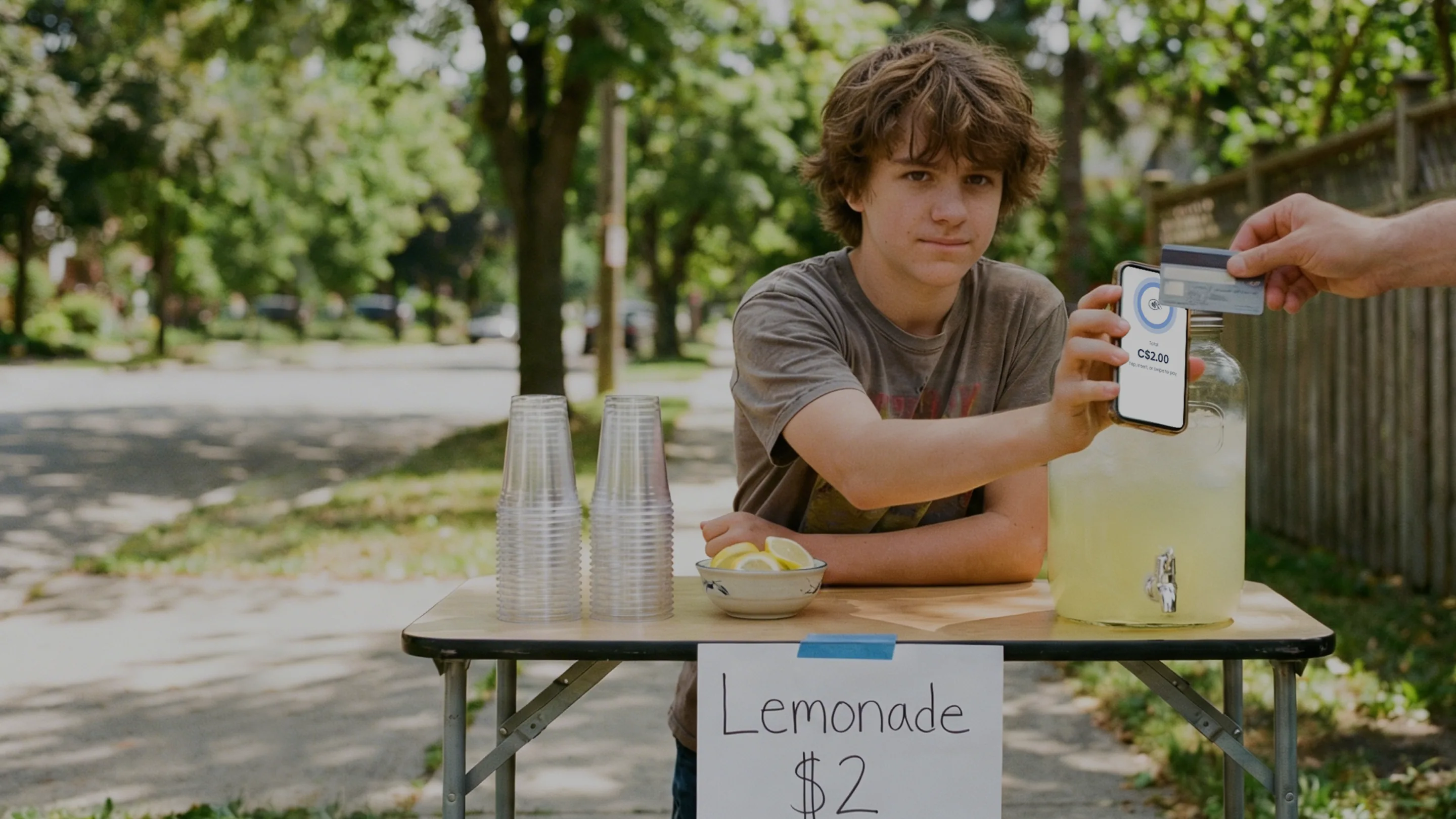
The Rise of Prompt-Driven POS Software for Modern Brands
Prompt-driven POS software lets a brand describe its checkout instead of settling for a vendor template. Why it is rising, why brands care, and the part no prompt can build.

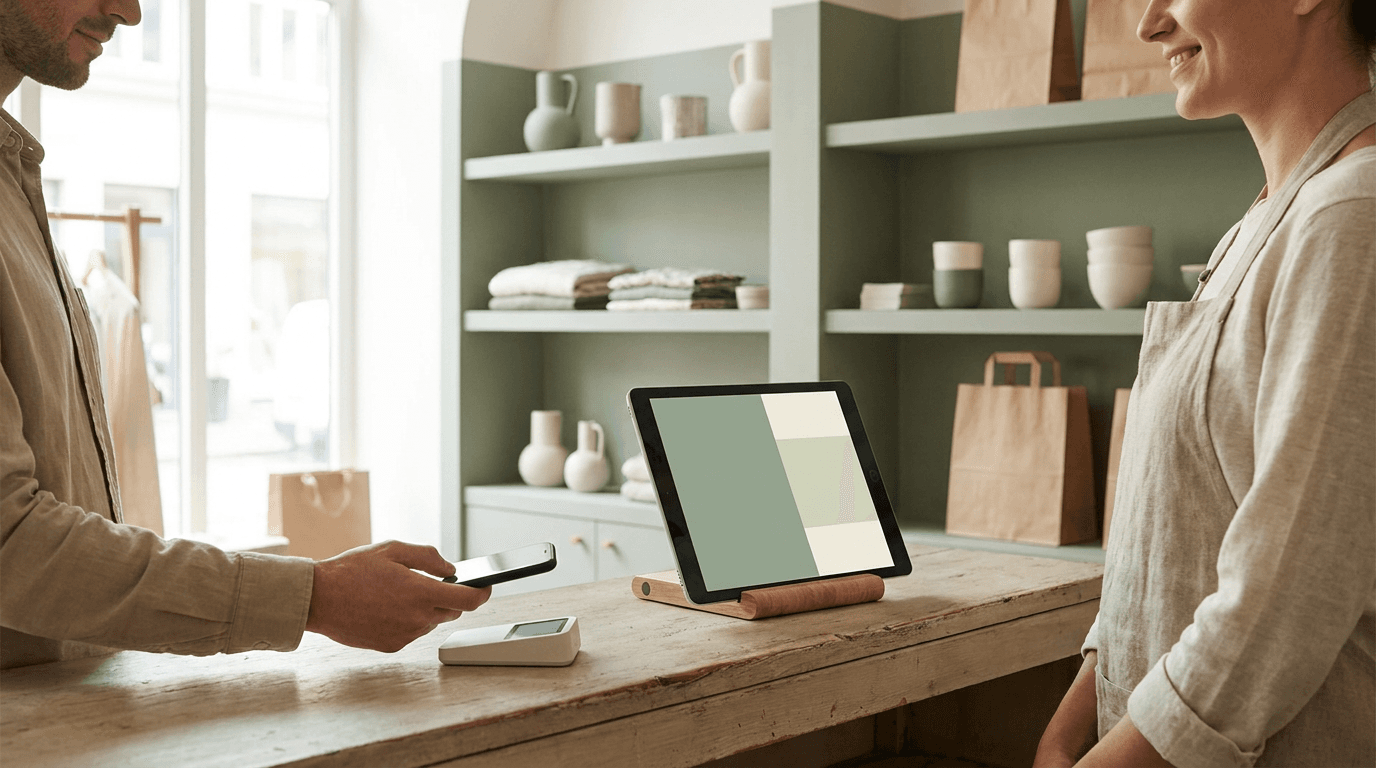
Prompt-driven POS software lets a brand describe the checkout it wants in plain language and get a working version back, instead of bending its counter to a vendor's fixed template. It is rising because describing software became normal just as physical stores proved their worth as a brand channel. For modern brands, the draw of prompt-driven POS software is a branded checkout experience that finally matches the rest of the brand. The limit: a description shapes what customers see, not the machinery that keeps stock, money, and reports correct.
What is prompt-driven POS software?
It is a point of sale where setup is a conversation. You describe what you sell, how customers pay, and how the screens should look. The system generates the checkout, shows a live preview, and lets you correct it one sentence at a time before it goes to the counter.
That is a different product from a POS with smart features bolted on, like sales forecasts or a dashboard chatbot. We covered the difference between a POS with AI and a POS an AI can build separately. In short: one can talk about your checkout, the other can change it.
Why is prompt-driven POS rising now?
Three shifts landed within about a year of each other. The specifics below are accurate as of publication in October 2026, so treat them as a snapshot.
Describing software went mainstream. Collins Dictionary named "vibe coding" its 2025 Word of the Year, defining it as using AI prompted by natural language to help write code. Building by description stopped being a novelty.
Assistants got a common plug. The Model Context Protocol (MCP, an open standard for connecting AI tools to other software) moved to the Linux Foundation's Agentic AI Foundation in December 2025. The project reported over 97 million monthly SDK downloads and 10,000 active servers¹. We covered why every retail platform will need an MCP server.
Physical retail still carries most of the spending. E-commerce accounted for 17.1% of US retail sales in the second quarter of 2026², so the large majority of retail dollars still move outside online checkout.
Why do modern brands care about the checkout screen?
Because the store has become a brand channel, and the checkout is the last screen a customer sees there. In ICSC's Halo Effect research, emerging direct-to-consumer brands saw a 13.9% boost in online sales in the surrounding trade area after opening a physical location³. Brands open stores to be seen, then often hand the final moment of the visit to a vendor's default interface.
Modern brands also rarely sell in one format. A flagship, a weekend pop-up, a market stall, and an event booth each want a different checkout. The pop-up wants three buttons and a fast line. The flagship wants the full catalog, gift cards, and returns. A fixed POS gives all four the same interface and leaves staff to work around the gaps.

Prompt-driven POS turns that around. Each format gets described on its own terms, in plain English, the way you would train a new hire, using the brand's own colors, fonts, and logo. It also changes how you should compare customizable POS software: flexibility predicts fit better than a feature checklist.
What can't a prompt build for a brand?
The parts that have to be right every time with nobody watching. Inventory that stays accurate when the pop-up and the flagship sell the last unit at the same moment. Reports that reconcile (match the money that actually moved) across every format. Tax applied the same way on every sale. Card payments that meet PCI rules (the card industry's security standard) on certified terminal hardware.
The obvious objection: if a sentence can describe the checkout, why not have a general coding tool build everything? Because it produces the screens and none of that machinery. Vibe coding a point of sale gets you a convincing demo in an afternoon, and a cheap AI POS app works until the first customer pulls out a card. For a brand the risk compounds, because four formats built four separate ways means four catalogs and four sets of numbers that never quite agree.

Separate building from operating, too. Square's MCP server, still in beta, lets assistants work with customers, orders, and items in an existing account. That helps you run the store. It does not change what the checkout is.
What should a brand check before choosing prompt-driven POS software?
Five questions separate a working platform from a good demo:
Can you start from a ready-made checkout and adjust it, or do you have to build from scratch?
Does every checkout you create run on the same catalog, inventory, and reporting?
Who handles card payments and hardware certification: the platform or you?
Can your team's own assistant build on it, and what is that assistant allowed to touch?
How long does a change take, from the sentence to the live counter?
Ask for the answers in a live demo, not on a slide.
So, is prompt-driven POS software worth it for modern brands?
Yes, for brands that sell in more than one format or treat the store as part of the brand. The checkout can match the packaging and the space, and a new format becomes a description instead of a project. That only holds if every checkout sits on one shared foundation for stock, payments, and reporting. Rule of thumb: let the description decide how the counter looks, never whether the numbers add up.
That split is how Final, the world's most customizable POS, is set up. Brands can start from a ready-made flow in the Flow Library or describe their own in Flow Studio. Every flow runs on the same Merchant Hub catalog, Final Pay payments, and reporting. To see a description become a working counter, start with Getting Started with Flow Studio, or connect a tool your team already uses over MCP.
Frequently asked questions
What is prompt-driven POS software?
Prompt-driven POS software is a point of sale you set up by describing what you want in plain language. The system generates the checkout screens and logic, shows a live preview, and lets you refine it one sentence at a time before it goes live at the counter.
Is prompt-driven POS the same as a POS with AI features?
No. A POS with AI features adds tools like sales forecasts or a chatbot to a fixed interface the vendor controls. Prompt-driven POS software lets you change the checkout itself by describing what you want.
Can I build a POS with a general AI coding tool instead?
You can build the screens, but not the infrastructure underneath them. Inventory that stays accurate under simultaneous sales, reports that reconcile, consistent tax, and PCI-compliant card payments on certified hardware have to come from the platform.
Why are brands interested in prompt-driven POS software?
Brands that sell through flagships, pop-ups, markets, and events want each checkout to fit the format and match the brand. Describing each checkout is faster than working around one fixed vendor template.
Do I have to build my checkout from scratch on a prompt-driven POS?
Not on every platform. The better systems let you start from a ready-made checkout and adjust it, so customization is an option rather than an entry requirement.
What is MCP and why does it matter for a POS?
MCP (Model Context Protocol) is an open standard for connecting AI tools to other software. On a POS platform, an MCP server can let your own assistant operate an existing account or, on some platforms, build the checkout itself.
What should I ask before choosing prompt-driven POS software?
Ask whether every checkout shares one catalog, inventory, and reporting system, who handles card payments and hardware certification, and how long a change takes from description to live counter. Ask to see the answers in a live demo.