



How POS CRM Features Turn Transactions Into Customer Relationships
Modern POS systems go beyond transactions. Learn how POS CRM features like loyalty programs, segmentation, and campaign automation turn shoppers into repeat customers.
 Mathias NielsenCEO, Final POS
Businesses today really need to focus on building strong relationships, encouraging customers to come back, and getting to know their audience better than ever before. That's why modern point-of-sale (POS) systems have come a long way from just being simple cash registers. POS CRM features now include built-in tools for customer engagement, loyalty programs, and data-driven personalization.
In this guide, we'll explore how a POS system with CRM and loyalty features can turn casual shoppers into loyal brand advocates, help you collect meaningful data, and generate measurable ROI.
From Transaction Tool to Customer Engagement Engine
In the past, a POS system was just a basic tool for ringing up sales. But as customer expectations have soared and competition has heated up - especially in sectors like retail, cafes, and hospitality - businesses have had to rethink their strategies.
Today's best POS platforms with CRM integration are designed not only to handle transactions but to actively foster customer relationships. Studies reveal that when consumers feel a connection to a brand, they are likely to spend more, and 76% prefer that business over its competitors. If that doesn't make a compelling argument for opting for a POS system with rewards feature, we're not sure what does!
A modern POS now acts as your frontline for customer segmentation, marketing automation, and in-store personalization, key drivers of customer retention in POS environments.
What Is a POS CRM System?
A POS CRM system combines point-of-sale capabilities with customer relationship management tools in a single platform. Unlike a standalone CRM, a POS CRM captures customer data at the moment of purchase — no manual import required. This means every transaction automatically enriches your customer profiles, enabling smarter segmentation, loyalty tracking, and personalized marketing without extra steps.
POS CRM software is used across retail, food and beverage, and hospitality to reduce churn, increase repeat visits, and grow customer lifetime value. Whether you're evaluating your first CRM POS system or switching platforms, understanding what these tools do is the essential starting point.
How a CRM POS System Works
A CRM POS system works by capturing customer data — name, contact details, and purchase history — at the point of sale and storing it in a unified customer record. Every subsequent transaction updates that record automatically, so your team always has a current view of each customer's behavior without manual data entry.
This real-time data flow is what separates a true POS CRM from a basic loyalty card or spreadsheet. When a customer checks out, staff can instantly see their purchase history, apply loyalty rewards, and trigger follow-up marketing — all from the same interface. You can explore how Final POS structures these records in the Introduction to Customers: records & order history guide.
Which Customer Management Tools Integrate with POS Purchase History?
Modern CRM POS platforms integrate purchase history with email marketing tools, SMS platforms, and e-commerce systems. This means a customer's in-store spend can automatically trigger a follow-up email, update their loyalty tier, or sync to your online store — without any manual export. Look for a POS CRM that offers native integrations or open API access so your customer data flows freely across every tool your business uses.
Which Systems Integrate with POS and CRM Platforms?
The most common integrations for a CRM POS system include e-commerce platforms (such as Shopify or WooCommerce), email marketing tools (such as Mailchimp or Klaviyo), accounting software (such as Xero or QuickBooks), and third-party loyalty apps. A well-integrated point of sale CRM ensures that customer data captured in-store is immediately available across all these systems, giving you a single source of truth for every customer relationship.
POS CRM Features That Matter
To build lasting customer relationships, you need to collect data and not only collect it, but also put it to work. A POS CRM solution gives you the tools to understand your customers and engage them at exactly the right moment. In this section, we'll explore the most impactful CRM features built into modern POS platforms and how they help drive loyalty, personalization, and smarter sales strategies.
1. Unified Customer Profiles
Some POS systems automatically build comprehensive customer databases. Each customer's purchase history, visit frequency, preferred products, and even payment methods can be logged into their profile.
2. Purchase Behavior & Segmentation
When you have this info, it is easy to segment your customers, either by product interest, frequency, or spend level. This allows you to execute very targeted campaigns, like win-back campaigns for the people who have not returned in a very long time or VIP offers to your top 10% of customers. It is a must-have retail CRM strategy.
3. Real-Time Tracking
With integrated POS CRM features, staff can access customer profiles instantly at checkout, enabling them to make informed upsell recommendations or apply loyalty rewards without delay. This immediate data access empowers your staff to provide exceptional, personalized service.
Loyalty Program Types and Their Business Impact
The type of loyalty program in your POS matters. The right structure can turn occasional customers into regulars and regulars into brand ambassadors. According to a survey, 70% of consumers engage more frequently with brands whose loyalty program they are members of compared to brands where they are not.
In this section, we're going to explore the various types of loyalty programs you can implement right through your POS system, and we'll break down how each one can enhance customer retention and boost your revenue.

Point-Based Systems
This is a very popular practice that spans a variety of industries—from coffee shops to salons—where customers accumulate points with each purchase, which can then be redeemed for rewards.
Tiered Programs
A tier is set for different sections of rewards which encourages higher spending. For example, "Silver" members get free gifts every 10 visits while "Gold" customers get a gift every 7 visits. These structures will automatically categorize your customers into segments with targeted communication, enabling specific reward strategies. Ideal for POS CRM for cafes and boutiques.
Cashback and Store Credit
These can be depended on by some networks wherein a user may earn a percentage from every purchase they make, which makes return visits more enticing. Ideal for best loyalty program software for small business.
Referral Programs
Encourage bringing friends to loyal customers. For example, "Refer a friend and you both get to enjoy 10% on your next visit."
Real-World Inspiration
Local brands as Starbucks and Sephora and other chains utilize franchises' POS systems integrated with loyalty programs to build customer retention. Seamless system integration enables maximum appreciation within a business.
Personalized Marketing Through CRM Integration
Once you've captured customer data in your POS system, you can activate it through marketing channels (especially email and SMS). The information collected allows you to categorize customers and analyze their purchasing habits, preferences, and behavioral patterns.
With such a high level of insight, it becomes possible to go beyond basic promotions and create campaigns that are tailored and targeted to achieve actual success. How CRM works in POS is simple: it enables smart segmentation, automation, and personalization.
Rather, personalized marketing does go beyond increasing the number of sales, it improves customer experience by making them feel that they are valued in that company. And when people feel recognized and valued, they're far more likely to come back. In fact, research suggests that customers who show loyalty do come back frequently and are likely to spend more money than other non-loyal customers. And that is the growth we like to see.
1. Campaign Automation
Many POS CRM features include marketing automation, allowing businesses to set up campaigns triggered by specific events. Examples include:
A "We miss you" discount after 30 days of inactivity
A birthday reward coupon
A thank-you message after a first purchase
2. Targeted Messages
Rather than blasting generic promotions, CRM segmentation allows you to send the right offer to the right person at the right time. This increases customer engagement and conversion rates.
3. Upselling & Cross-Selling
A POS with a personalization engine can recommend complementary products based on purchase history, like suggesting a dessert with a specific main dish, or a travel-sized version of a product just bought.
Using Data Insights to Measure Success
To improve your loyalty program in POS, you need to track the right metrics. Loyalty analytics give you a real-time view of what's working and what needs to change.
Essential Metrics Include:
Customer Lifetime Value (**CLV**): Measures total revenue generated by a customer over time
Retention Rate: Tracks how many first-time buyers return
Redemption Rate: Shows how often loyalty rewards are actually used
Engagement Rate: Monitors interaction with email/SMS campaigns
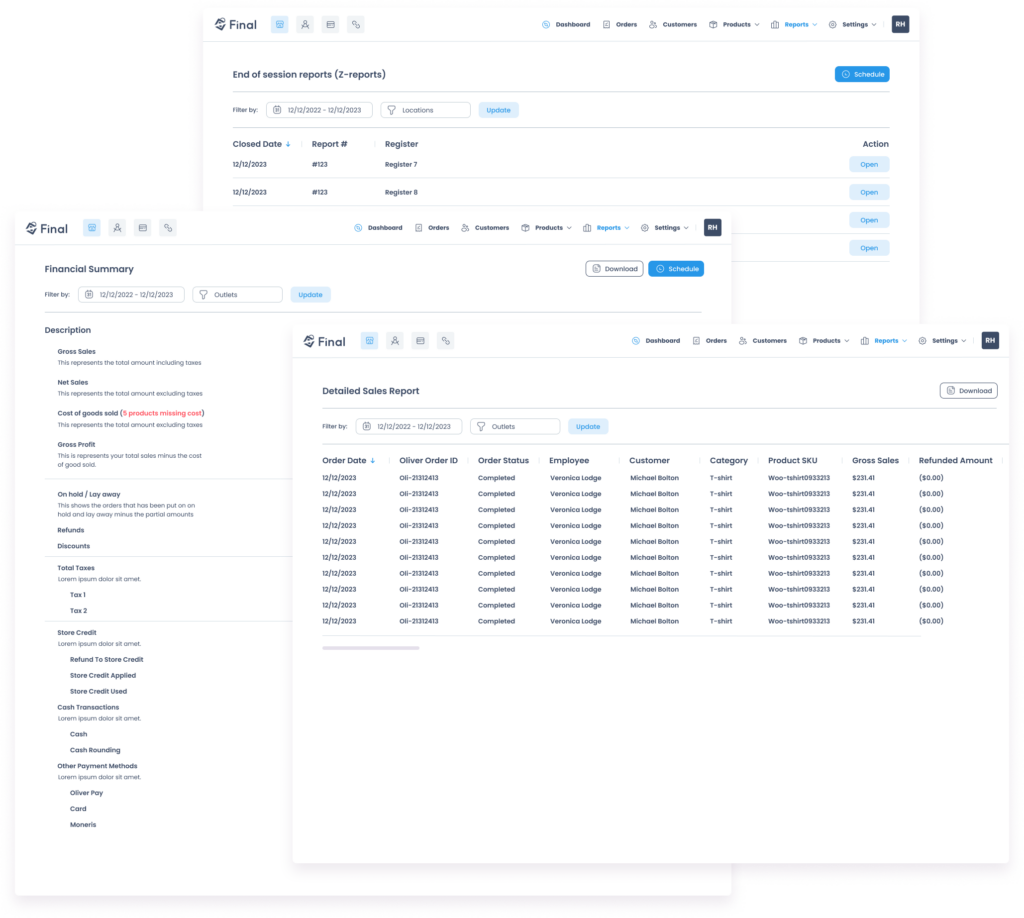
These KPIs are available in most POS technology dashboards, allowing for continuous strategy improvement. Sales analytics dashboards built into your POS software can visualize these trends over time, helping you tweak your strategy for even better results.
Choosing the Right POS with Loyalty & CRM Features
Not all POS systems are created equal. Selecting the right POS loyalty program requires identifying features that align with your business needs and customer expectations. If you're considering an upgrade or switching platforms. Here's what to look for when evaluating the best POS for loyalty programs:
Feature Checklist:
Unified customer database
Real-time sync between locations and channels
Built-in CRM and loyalty program tools
Email/SMS campaign automation
Segmentation and trigger-based messaging
Scalable infrastructure for future growth
Support for both in-store and online transactions
Scalability & Integrations
If your business is growing/or plans to, make sure your POS can grow with you. Look for POS CRM platforms that integrate with other business tools you use, such as e-commerce systems, accounting software, or third-party marketing tools.
Cost vs. Benefit
While CRM-enabled POS systems may cost more upfront, the long-term CRM benefits often outweigh the investment. Increased customer retention, improved upsell rates, and more efficient marketing can lead to exponential growth.
Can't Find the Perfect POS? Customize It with Final Code
If standard POS systems don't meet your loyalty or CRM needs, Final Code lets you take full control. With Final Code, you can create your own logic, design custom menus, and build API connections between your tools and data sources.
Go beyond standard data. With Code, you can define custom fields and extensions, giving you the flexibility to capture and use exactly the information your business depends on.
Whether it's advanced loyalty tiers or unique CRM flows, Final Code gives you the tools to build the experience your customers deserve.
Key Takeaways
A great POS system does more than handle transactions—it helps build real customer relationships. With built-in POS CRM features and loyalty tools, you can:
Understand and segment your customers
Personalize communication and rewards
Increase retention and repeat purchases
Make smarter decisions through data
Track and improve ROI
Ready to explore how your POS handles orders and customer activity? See How to find and view orders in the Final POS help center.
Frequently asked questions
What is a POS CRM system?
A POS CRM system combines point-of-sale capabilities with customer relationship management features. It allows businesses to track customer data, segment audiences, automate marketing, and build loyalty programs directly from the POS interface.
What is the difference between a POS system and a CRM POS system?
A standard POS system processes transactions. A CRM POS system does that and also captures customer data at checkout, builds unified customer profiles, tracks purchase history, and enables loyalty and marketing automation — all without a separate CRM tool.
How can POS loyalty programs improve customer retention?
Loyalty programs integrated with POS systems reward customers for repeat visits or spending, encouraging return behavior. Structures like point-based or tiered rewards increase engagement and foster brand loyalty.
What are the most effective CRM features in a POS platform?
Key CRM features in modern POS platforms include unified customer profiles, real-time purchase tracking, segmentation tools, and campaign automation. These enable personalized marketing and targeted communication.
Is a CRM-enabled POS system worth it for small businesses?
Absolutely. Even small teams benefit from CRM features like automated messaging, targeted offers, and data-driven insights—all of which can fuel growth and improve customer loyalty.
Can POS CRM systems support both in-store and online sales?
Yes. POS platforms like Final POS sync customer data across channels, offering a seamless experience whether a customer shops online, in-store, or across multiple locations.
Which customer management tools integrate with POS purchase history?
Most modern CRM POS platforms integrate purchase history with email marketing tools (such as Mailchimp or Klaviyo), SMS platforms, e-commerce systems, and accounting software. These integrations allow in-store purchase data to automatically trigger follow-up campaigns, update loyalty tiers, and sync across your entire tech stack.
Which systems integrate with POS and CRM platforms?
Common integrations for a CRM POS system include e-commerce platforms like Shopify or WooCommerce, email marketing tools, accounting software like Xero or QuickBooks, and third-party loyalty apps. A well-integrated point of sale CRM ensures customer data flows freely across all these systems.
How do I find a specific order in my POS CRM system?
In Final POS, you can search by receipt ID or product name and filter by order status. Each order shows its items, totals, customer details, notes, and a full activity timeline including any refunds. See the step-by-step guide: How to find and view orders.