



If You Build Your Own Tool That Touches Payments, Who Owns the Compliance Risk?
Your payment provider's PCI badge does not transfer to you. Here is who actually owns the compliance risk when a homegrown tool touches payments, and the architecture that keeps custom builds out of scope.
 Mathias NielsenCEO, Final POS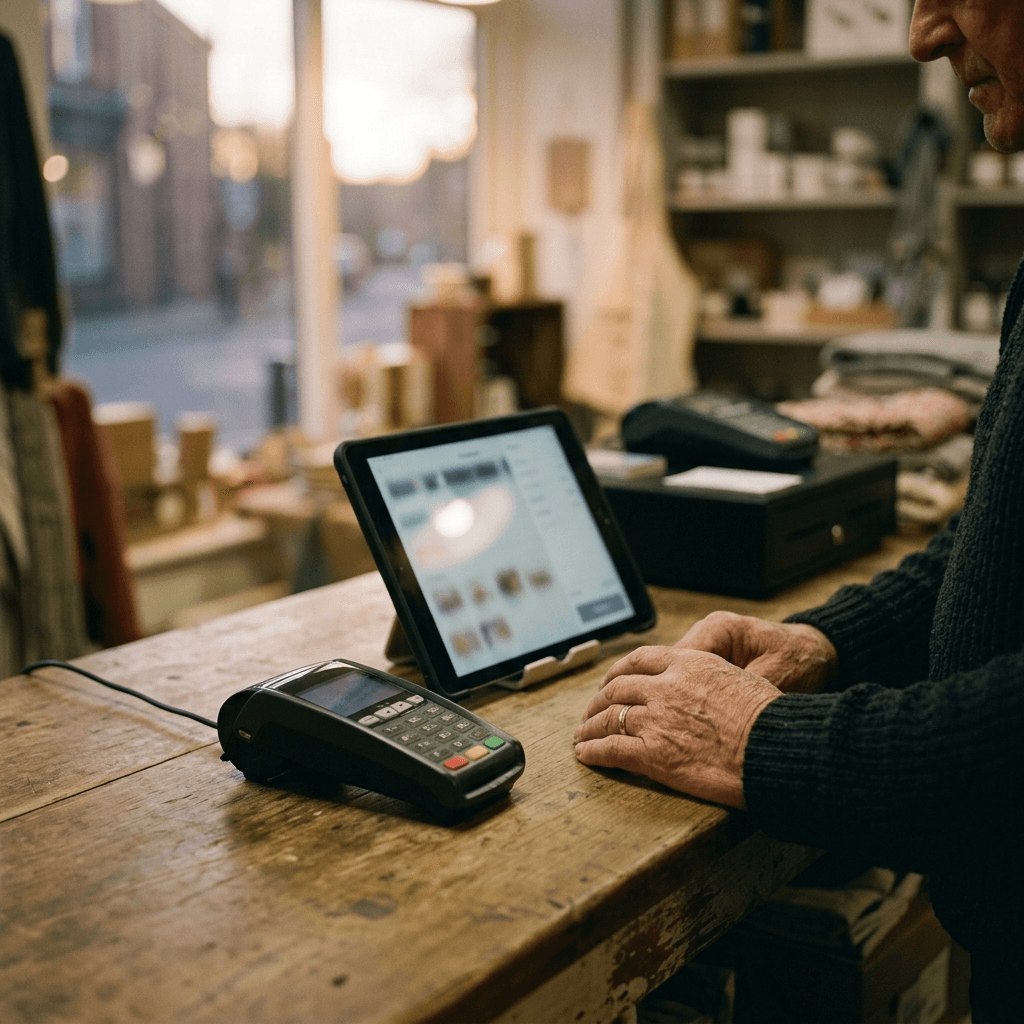
You do. Not the AI that generated the code, not your hosting provider, and not your payment provider. The moment a tool you built touches payments, the compliance risk sits with your business, and it stays there no matter how many compliant vendors you plug in. What you can change is the size of that risk, and the gap between a well-designed custom tool and a careless one is enormous.
Why does the risk land on you and not your vendors?
Card acceptance runs on a chain of contracts. The card networks set the rules, your acquirer (the bank that settles card sales for you) enforces them, and your merchant agreement passes them down to you. The rulebook is PCI DSS, the card industry's data security standard, and it applies to every business that stores, processes, or transmits cardholder data (card numbers and the details that travel with them). The current version is 4.0.1. (Version numbers and program details are accurate as of publication; treat the specifics as a snapshot.)
Your vendors carry obligations for their own systems, and a compliant payment provider shrinks your share of the work dramatically. But nothing a vendor does transfers ownership. The PCI Security Standards Council is explicit that whether you must validate compliance is decided by the payment brands and your acquirer, and their answer, written into your merchant agreement, is yes. Every year, someone at your business signs an attestation stating that your environment meets the standard. That signature is yours, not your vendor's.
What changes the moment your own code touches card data?
Scope. Compliance effort is priced in scope: every system that touches cardholder data, plus everything connected to it, falls under the standard.
A merchant whose payments are fully handled by a compliant provider and its certified devices validates with a short self-assessment questionnaire (an annual checklist), a few dozen questions. A merchant whose own software handles card numbers falls into the deepest tier, which mirrors most of the full standard: well over two hundred requirements covering quarterly vulnerability scans, penetration testing, access controls, logging, and formal security policies¹.
That checkout form an AI wrote for you in an afternoon? If it accepts card numbers, your web server, your database, your admin laptop, and your shop Wi-Fi are all candidates for scope. And you cannot quietly file the short questionnaire anyway. Picking a tier you are not eligible for does not reduce your risk; it means the document you signed is wrong, which tends to surface at the worst possible moment, right after a breach.

What does getting it wrong actually cost?
Enforcement is contractual, so it usually shows up on your processing statement. Many processors bill a recurring non-compliance fee every month until you validate. After a breach, the costs stack up: a mandatory forensic investigation you pay for, card reissuance costs, and escalating penalties passed through your acquirer, commonly cited in the range of US$5,000 to US$100,000 per month (based on penalty schedules published by PCI compliance assessors). In serious cases, a business can lose the ability to accept cards at all.
For a small merchant, the heaviest cost is quieter than any fine: running a real security program takes time you planned to spend running the business.
How do you build custom tools without taking on card-data scope?
Keep your code out of the card path. Your custom tool should orchestrate the sale: build the cart, apply discounts, total the order, and send the amount to be charged. The card itself should only ever meet a certified terminal (payment hardware validated to handle cards) or your provider's hosted payment page, either of which passes it directly to a payment processor (the company that moves the money). Your tool gets back a result, approved or declined, plus a token (a reference number that is useless to anyone who steals it).
This split is the whole argument for headless POS architecture: custom screens on top, certified payment infrastructure underneath. It is also why AI-generated checkouts demo beautifully and stall in production, and why a web form is the wrong answer for card-present debit like Interac: in-person payments belong on certified hardware, both technically and contractually.

Final is built around this exact boundary. The flows you build, whether you prompt them yourself or connect your own AI over MCP, control screens, carts, and catalogs. Card data goes from certified terminal hardware to a payment processor through Final Pay, and it never enters the flow you built. Custom where custom is safe, standardized where the liability lives.
So, who owns the compliance risk?
You do, and you always will. The real decision is how much scope you take on, and that is an architecture choice, not a paperwork choice. Before you ship a tool that touches payments, ask one question: can my code ever see a card number? If yes, the compliance program is yours to run. If no, you keep the flexibility of a custom build with a fraction of the burden. If you are weighing that kind of build now, start with the signs you have outgrown your off-the-shelf POS.
Frequently asked questions
Does using a PCI compliant payment provider make my business compliant?
No. A compliant provider shrinks the amount of work you have to do, but your business still validates its own compliance every year through your merchant agreement. Responsibility never transfers to a vendor.
What is the difference between SAQ A and SAQ D?
They are both self-assessment questionnaires under PCI DSS. The shortest tiers apply when payments are fully outsourced to a compliant provider and certified hardware. SAQ D applies when your own systems handle cardholder data and mirrors most of the full standard, including scans, testing, and formal policies.
Does AI-generated code change my PCI obligations?
No. The standard cares about which systems touch cardholder data, not who or what wrote the code. An AI-generated checkout that accepts card numbers puts your systems fully in scope, exactly as hand-written code would.
Can small businesses really be penalized for PCI non-compliance?
Yes, though it usually arrives as a monthly non-compliance fee from your payment processor rather than a headline fine. The large penalties typically follow a data breach, alongside forensic investigation and card reissuance costs.
What is tokenization?
Replacing a card number with a reference token that is useless outside the payment system that issued it. Your tools can store and use the token for refunds or repeat billing without ever holding real card data.