



Can the iPhone Duo take Tap to Pay?
Apple's foldable clears every published requirement for Tap to Pay on iPhone, but nobody can confirm it until the device ships on October 23. Here is what is settled, what is not, and why the phone matters far less than the software behind it.

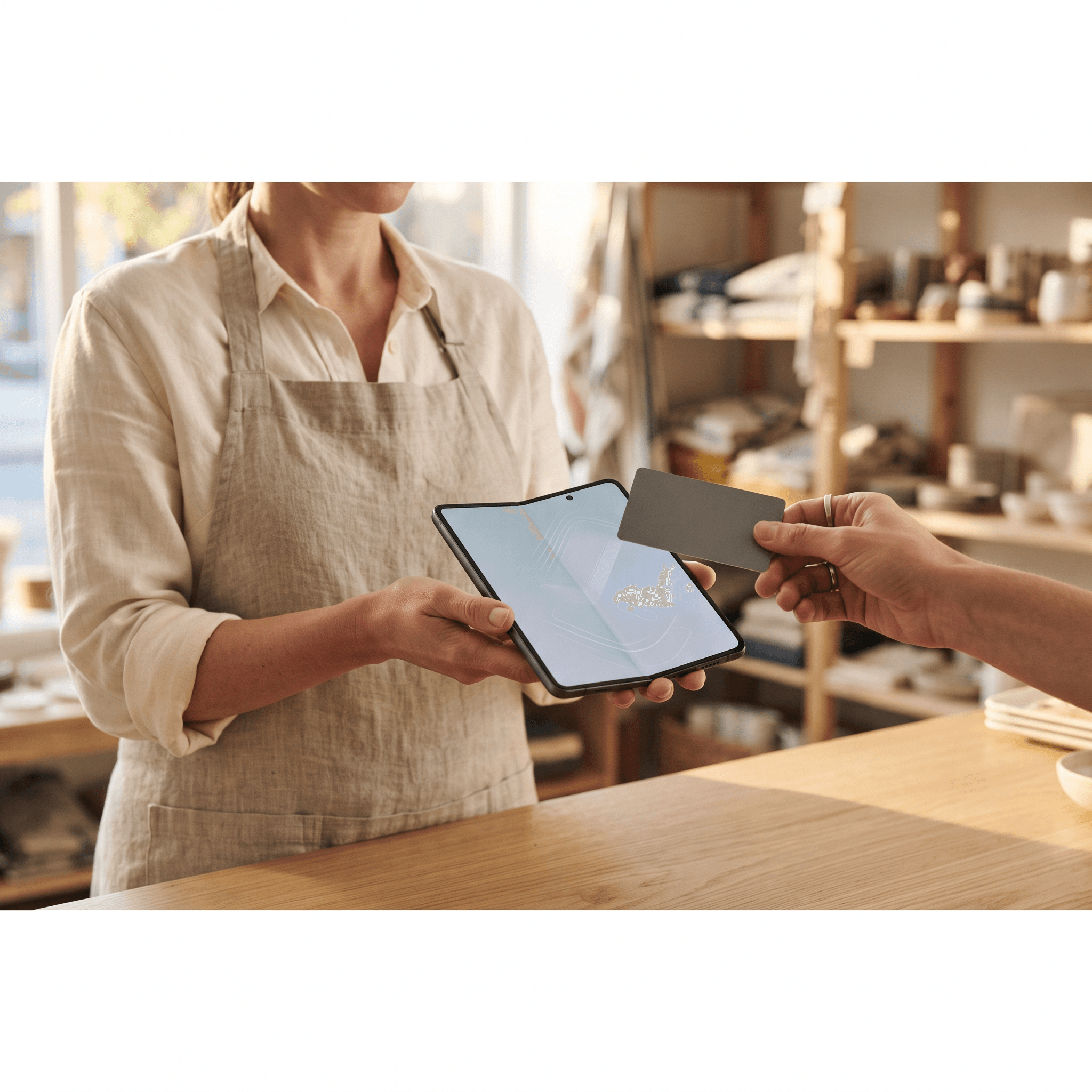
Yes, on paper. The iPhone Duo Tap to Pay question has a clean answer on the specification sheet: Apple's first foldable meets every published requirement for Tap to Pay on iPhone, and nothing about it rules the feature out. What nobody can do yet is confirm it on real hardware, because the phone does not reach buyers until October 23¹.
That gap between "meets the published requirements" and "tested and supported" shows up with every new phone. It is worth understanding, because it decides whether you can sell on a device the week it arrives or the month after.
What does Apple require for Tap to Pay on iPhone?
Two things, and the bar is lower than most merchants assume. The device has to be an iPhone Xs or newer, and it has to run a current version of iOS². That is the whole hardware requirement.
The Duo clears both with room to spare. It is eight years newer than an iPhone Xs, it ships on iOS 27, and its published specifications list NFC with reader mode. NFC is the short-range radio inside the phone, and reader mode is the part that matters here: it lets the device read a customer's contactless card rather than only present your own. A phone without reader mode cannot act as a card reader no matter what software you install.
One caveat covering everything below: ship dates, iOS versions and supported-device lists move quickly. Treat the specifics here as a snapshot taken at publication.

So why can nobody confirm it yet?
Because "meets the published requirements" and "tested and supported" are different claims, and only Apple and your payment provider can make the second one.
Compatibility pages get revised after a device ships, not before, and that was true of every iPhone that came before this one. Separately, the app taking the payment has to behave on the new operating system version, which means the provider behind it runs its own testing pass first. Neither of those is cause for concern. Both take a few weeks. If you are planning a season, a launch or a market run around a specific handset, do not plan it around a phone that is not in your hand yet.
It is also a reminder of how much sits behind a feature that looks like one button. Getting contactless payments into a point of sale app takes a processor partnership, Apple's permission and a certification pass, which is a longer story we told in what it actually takes to build a Tap to Pay app.
Where does the customer tap on a phone that folds?
This is the question actually worth asking, and it is the one nobody outside Apple can answer yet.
Today the instruction is simple. The customer holds their card, phone or watch at the top of your iPhone, over the contactless symbol, for a second or two³. On a flat phone, the top of the device is obvious to everybody, including a customer who has never stood at your counter before.
A folding phone has two shapes. Closed it is an ordinary handset with a 5.4 inch outer screen. Open it is a 7.6 inch panel¹. Whether the contactless antenna lives in one half or the other, whether the tap target sits in the same place in both shapes, and what happens if a customer taps the wrong panel are all unpublished.

That reads like a small detail. At a counter it is not. The most common cause of a slow contactless tap is a customer holding their card in the wrong spot for three or four seconds. A tap target that shifts depending on how the device is folded turns a ten second instruction to a new hire into an actual training item, and on a busy Saturday it turns into queue length.
Does a new phone change anything at your counter?
Honestly, no. This is where the excitement usually meets the invoice.

The handset is the cheapest and most replaceable piece of a point of sale. A US$1,999 phone¹ reads a contactless card exactly as well as a five year old one, because the same short-range radio and the same operating system feature do the work in both. You are buying the screen, not the payment. The same logic runs the other way too, which is the case for reusing the hardware you already own rather than replacing it on a launch date.
What decides whether a busy day goes well is the software behind the tap. Whether stock counts stay right when two staff sell the last of something at the same moment. Whether the day's totals reconcile, meaning they match the money you actually banked. Whether tax is calculated correctly on a mixed basket. Whether a refund three weeks later can find the original sale. A new phone brings none of that with it, and no phone ever will. If you are working out what to actually spend on, the guide to choosing POS hardware is a better starting point than a launch keynote.
Final runs on a supported iPhone or NFC-equipped Android device you already own, and the rules that apply today will apply to the Duo: the sale is rung up and the payment taken on that one device, with Final Pay connected. The counter routine itself is in how to take a Tap to Pay payment, and registering the device is covered in how to set up a Native Station.
So, can the iPhone Duo take Tap to Pay?
Very likely yes, and not yet confirmed. It clears Apple's published requirements comfortably, it has the NFC reader mode the feature depends on, and it ships on a current version of iOS. The sensible position is to treat it as probable until Apple's supported-device material catches up after October 23, and to leave the one genuine unknown, where the customer taps on a device that folds, for whoever gets one first.
Here is the rule of thumb: before buying a phone to run your till, ask whether you would still buy it if it could not take a single payment. If the answer is no, buy the cheaper phone and put the difference into the software.
New to contactless at the counter? Start with what Tap to Pay is and how to accept it in your business.
Frequently asked questions
Will Tap to Pay work on the iPhone Duo?
Almost certainly, but it is not confirmed. The iPhone Duo meets every requirement Apple publishes for Tap to Pay on iPhone, including NFC with reader mode and a current version of iOS. Apple's supported-device material is expected to catch up after the phone ships on October 23.
What iPhone models support Tap to Pay?
Apple lists iPhone Xs or later, running a current version of iOS. There is no separate card reader to buy, and no extra hardware requirement beyond the phone itself.
Do I need a card reader if I use Tap to Pay on iPhone?
No. With Tap to Pay the phone is the reader. The customer taps a contactless card, phone or watch directly on your device, and the sale is rung up and paid on that same device.
Where does the customer tap on the phone?
At the top of the merchant's iPhone, over the contactless symbol, held there for a second or two. On a folding phone it is not yet public whether that spot changes when the device is opened or closed.
Is a foldable iPhone worth buying to run a point of sale?
For most merchants, no. A new phone reads a contactless card no better than a five year old one, because the same short-range radio and the same operating system feature do the work. The larger screen is the thing you are paying for.
When does the iPhone Duo come out?
Pre-orders open Friday, October 16, 2026 and the device is available Friday, October 23, 2026, starting at US$1,999 for 256GB.