



Why Is Your Cash Drawer Short at Close, and How Do You Find the Cause?
A cash drawer short at close is almost never a mystery. Four causes explain nearly every shortage, and the close report plus per-shift counts will point at the one that hit you.
 Mathias NielsenCEO, Final POS
Your cash drawer is short at close for one of four reasons in almost every case: the opening float was counted wrong, cash left the drawer without being logged, a sale was rung on the wrong tender (payment method), or change was given incorrectly. Theft is real, but it is the least common cause and the first one everyone suspects. A cash drawer short at close is not a mystery you solve by staring at the money. It is a records problem, and the close report tells you where to look.
What does the over or short line on the close report tell you?
It tells you the size and the direction of the problem, which is most of the diagnosis. When you close a session with cash tracking on, the POS compares two numbers. Expected cash is the opening float plus cash sales, minus cash refunds and recorded removals, plus recorded additions. Counted cash is what you physically counted. The difference is the over or short line: short means the drawer holds less than the records say it should, and over means it holds more.
Read that line like a symptom, not a verdict:
A shortage that lands on a round number (exactly $20, exactly $50) usually means a payout or a float error, not sloppy change.
Small, inconsistent amounts in both directions across several days point at change handling during rushes.
A cash shortage paired with a card total that runs heavy by about the same amount points at a tender mistake, not missing money.
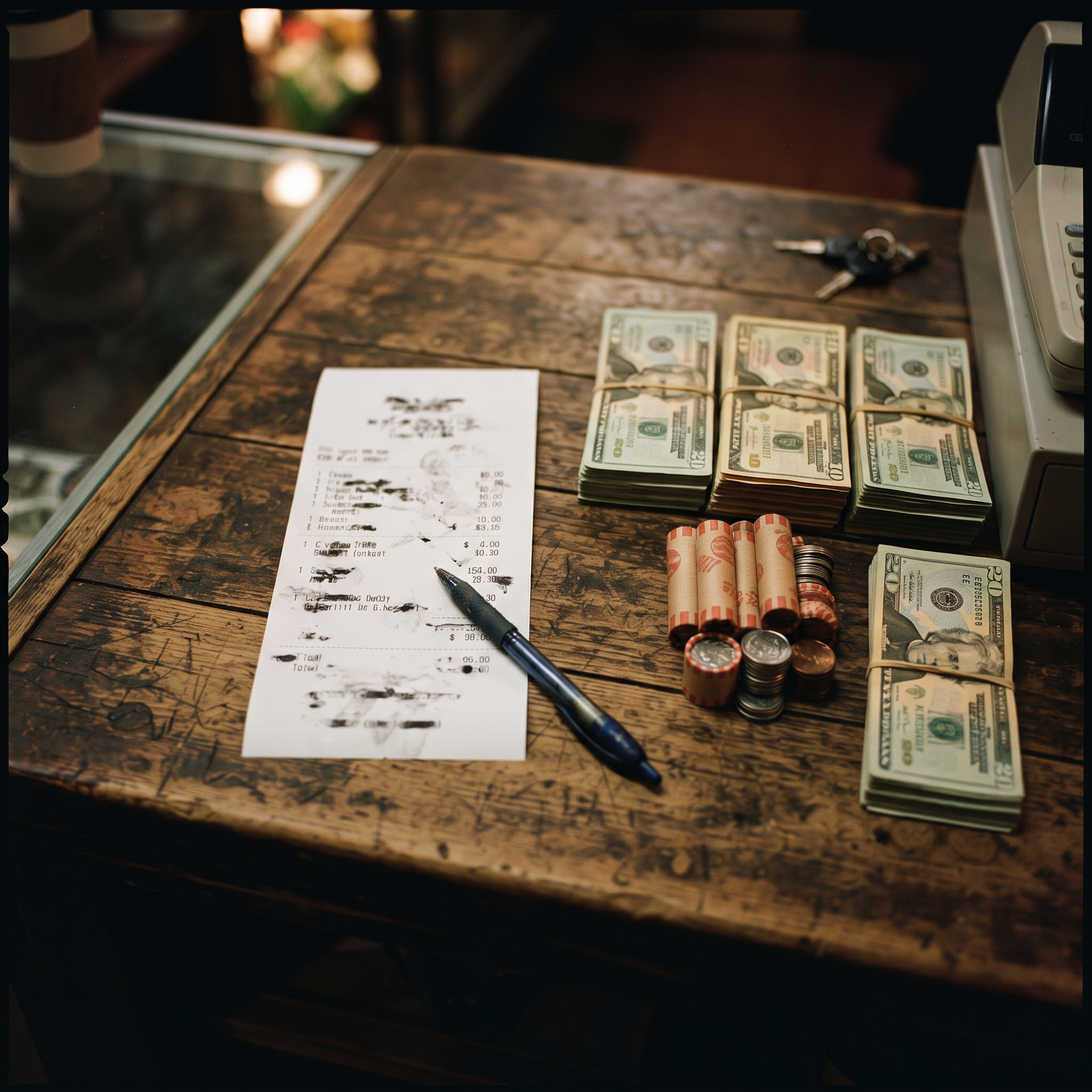
What usually causes a cash drawer shortage?
Four causes account for nearly all of them.
A miscounted opening float. If yesterday's closer left $180 in the drawer but recorded $200, today's till is $20 short before the first sale. Float errors carry forward silently, which is why a shortage so often appears to happen on the wrong shift.
A payout taken from the drawer without logging it. Someone paid the produce delivery, bought cleaning supplies, or handed out a cash refund, and never recorded the removal. The money left for a legitimate reason. The record never followed.
A sale rung on the wrong tender. A $40 cash sale rung as card leaves the drawer $40 short of the records while the card column runs $40 heavy. Nothing is missing. The sale is filed in the wrong place.
Change given wrong. Change for a $50 handed back on a $20 bill, or the reverse. These are the small, random errors that cluster at rush hour.

How do you find the cause of a short drawer?
Work from the cheapest check to the most expensive.
Recount the drawer. Closing miscounts are as common as opening ones, and a recount is free.
Recheck the float. Compare today's recorded opening float against yesterday's closing count. If they disagree, the shortage predates the shift that got blamed for it.
Look for unlogged removals. Receipts or supplier invoices sitting in the drawer, deliveries that arrived that day, any refund given in cash. Most missing payouts are found this way in minutes.
Compare tender totals. Pull the transaction log and check whether the card total is heavy by roughly the amount the cash is short. Final's Transactions report shows every sale with its payment method and employee, so a mis-tendered sale stands out. Knowing which of your POS reports answers which question makes this step fast.
Look for a pattern. A one-off shortage is an accident. The same amount, the same shift, week after week, is not. Patterns are also where spreadsheet-based reporting fails you, which is a big part of why nightly CSV exports are not a reporting strategy.
How do counts per shift and per user narrow it down?
A drawer counted once a day gives a shortage a twelve-hour window and every staff member who touched the till. A drawer counted every shift gives it one shift and one or two names. That is the whole trick: shortages hide in the gaps between counts, so shrink the gaps.
This is what Final's cash management does when it is turned on for a flow. Opening a session prompts for the opening float. Every cash movement during the shift is recorded against that session, with a note field so a payout carries its reason. Closing requires counting the drawer, and the End of Session report saves with a payments summary per tender and the names of who opened and closed. Because staff switch users on the till instead of sharing one login, each sale and tip is credited to the person who rang it. When a drawer comes up short, you are no longer asking who worked today. You are reading which session broke and who was on it. The Station Home guide covers how sessions and per-shift counts work in practice.
One habit multiplies the value of all of this: count blind, meaning count the drawer before looking at the expected total. A counter who knows the target tends to find it. Blind counts are the backbone of a solid cash drawer management routine.

So, why is your cash drawer short at close?
Because one of four things happened: the float was wrong, a payout went unlogged, a sale hit the wrong tender, or change was given incorrectly. The over or short line tells you the size and direction, the cash ledger and transaction log tell you the event, and per-shift counts tell you the person and the time. A shortage can only hide in the gap between two counts, so shorten the gap. And if you are still running cash out of a box and reconciling from memory, there is a gentle migration path from cash box to POS that keeps cash working the whole way through.
Frequently asked questions
Is a short cash drawer always theft?
No. The most common causes are a miscounted opening float, an unlogged payout, a sale rung on the wrong tender, and change errors. Theft usually shows as a repeating pattern with the same size and shift, not a one-off shortage.
What is a blind count?
Counting the drawer without seeing the expected total first. It keeps the count honest, because a counter who knows the target tends to find it.
What does it mean when the drawer is over at close?
The drawer holds more cash than the records expect. Common causes are change given short, an unrecorded cash addition, or a card sale rung as cash.
How do I find an unlogged cash payout?
Check the drawer for receipts or invoices, list any deliveries or cash refunds from that day, and compare the recorded cash removals against what staff remember paying out.
How often should you count a cash drawer?
At least at every shift change and at close. Each count shrinks the window a shortage can hide in and ties responsibility to one person's session.